Arizona is famous for its deserts, mountains, and incredible wildlife. But along with beautiful scenery comes a variety of reptiles—including snakes. Many homeowners are surprised when they discover snakes in their backyard in Arizona, especially in areas close to natural desert landscapes.
The good news is that most backyard snakes in Arizona are harmless and actually beneficial. These reptiles help control pests such as mice, rats, and insects that might otherwise invade your property. However, because Arizona is also home to several venomous species, it’s important for residents to understand how to identify common snakes and know what to do if they encounter one near their home.
In this guide, we’ll explore the most common backyard snakes in Arizona, explain how to recognize them, and provide simple safety tips for homeowners. Whether you live in a desert suburb or near open land, understanding the snakes around you can make your home environment safer and less stressful.
Why Snakes Appear in Arizona Backyards
If you’ve seen a snake in your yard, you might wonder why it chose your property. The answer usually comes down to food, shelter, and water. Snakes are opportunistic animals, and they tend to settle in places where these resources are easy to find.
Here are a few common reasons snakes appear in Arizona yards:
1. Rodents and small animals
Backyards that attract mice, rats, or birds can unintentionally attract snakes as well. Snakes often follow their food sources, and rodents are one of their favorite meals.
2. Cool hiding places
During the hot Arizona summer, snakes look for shaded areas to escape extreme temperatures. Rock piles, wood stacks, thick bushes, and debris can provide perfect hiding spots.
3. Water sources
Even small amounts of water—such as bird baths, pet bowls, or irrigation systems—can attract wildlife, including snakes.
4. Natural desert surroundings
Homes built near open desert areas naturally experience more wildlife encounters. Snakes may simply be passing through their natural territory.
Understanding these factors helps homeowners reduce the chances of future snake encounters.
Most Common Backyard Snakes in Arizona
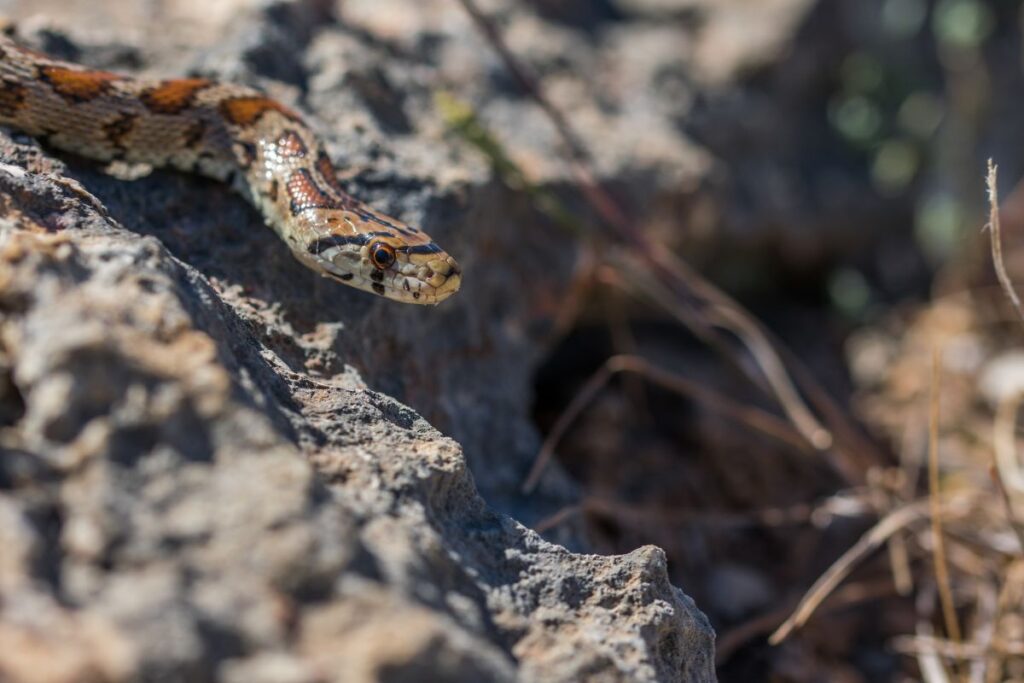
Arizona has more than 50 snake species, but only a few are commonly seen around homes. The following snakes are among the most frequently spotted in residential yards.
1. Gopher Snake
The gopher snake is one of the most common backyard snakes in Arizona. These snakes are often mistaken for rattlesnakes because of their similar patterns and defensive behavior.
Gopher snakes have brown or dark blotches along their bodies and can grow up to six feet long. When threatened, they may flatten their heads, hiss loudly, and vibrate their tails against dry leaves to imitate a rattlesnake. Despite this intimidating display, they are completely non-venomous.
Homeowners should actually consider gopher snakes beneficial because they eat rodents, rabbits, and other small pests that damage gardens and property.
2. Coachwhip Snake
The coachwhip snake is another species frequently seen in Arizona yards. These snakes are known for their impressive speed and slender bodies.
Coachwhip snakes usually have a dark head and lighter tan or brown body that resembles braided leather—hence the name “coachwhip.” They are non-venomous and rely on their speed to escape danger.
These snakes often hunt during the daytime and feed on lizards, rodents, and insects. Although they may look intimidating due to their length, coachwhip snakes rarely pose a threat to people.
3. Kingsnake
The kingsnake is one of the most helpful snakes you can have around your property. Kingsnakes are famous for eating other snakes—including venomous ones.
Arizona kingsnakes typically have black and white bands running across their bodies. They are calm, non-aggressive reptiles that prefer to avoid humans whenever possible.
Because they help control other snake populations, many wildlife experts consider kingsnakes an important part of the desert ecosystem.
4. Western Diamondback Rattlesnake
Unlike the previously mentioned species, the Western diamondback rattlesnake is venomous and should be treated with caution. This snake is responsible for many of the rattlesnake sightings reported in Arizona.
Western diamondbacks are usually easy to identify because of their diamond-shaped patterns and distinctive rattling sound when they feel threatened.
These snakes typically avoid people and only strike when they feel cornered or disturbed. However, homeowners should keep a safe distance and contact wildlife professionals if a rattlesnake is found near the house.
5. Sidewinder Rattlesnake
Another rattlesnake species occasionally found in desert yards is the sidewinder. This snake gets its name from its unusual sideways movement across sandy terrain.
Sidewinders are usually smaller than other rattlesnakes but still venomous. They prefer open desert areas with loose sand, so encounters in residential areas are less common but still possible in certain regions.
If you live in the Mesa area and recently spotted a snake, you may also want to read our guide on Snakes in Mesa Arizona: Common Species and What to Do.
How to Tell if a Backyard Snake Is Dangerous
For many people, the biggest concern when encountering a snake is determining whether it is venomous. While identifying snakes can take practice, there are several features that may help distinguish potentially dangerous species.
Rattles:
Rattlesnakes have a distinctive rattle at the end of their tails. When threatened, they shake this rattle to warn predators and humans.
Head shape:
Many venomous snakes have broader, triangular heads compared to the slimmer heads of non-venomous species.
Body patterns:
Some rattlesnakes have diamond-shaped patterns or bold banding across their bodies.
However, it’s important to remember that identification mistakes are common, so the safest approach is to treat any unknown snake with caution and avoid close contact.
What to Do if You Find a Snake in Your Backyard
Seeing a snake in your yard can be alarming, but reacting calmly is the most important step. Snakes rarely attack people unless they feel threatened.
Here are practical steps homeowners should follow:
1. Keep your distance
Maintain a safe distance and avoid trying to touch or capture the snake.
2. Keep pets and children indoors
Pets and curious children are at higher risk of accidental bites.
3. Allow the snake to leave
Most snakes simply move through yards while searching for food or shelter. If left alone, they often leave on their own.
4. Contact wildlife professionals if needed
If the snake appears to be venomous or refuses to leave, local wildlife control services can safely remove it.
Remaining calm and avoiding sudden movements can prevent most dangerous situations.
How to Prevent Snakes From Entering Your Yard
Preventing snake encounters often involves making your yard less attractive to wildlife.
Here are effective prevention strategies:
Remove rodent attractants
Store pet food securely, seal garbage containers, and eliminate places where rodents can hide.
Keep grass trimmed
Short grass makes it harder for snakes to hide and hunt.
Clear debris and clutter
Wood piles, rock stacks, and thick vegetation create ideal snake hiding places.
Seal small openings
Check for gaps around fences, foundations, and sheds where snakes might enter.
Install snake fencing
Special fencing designed to block snakes can be installed around yards in high-risk areas.
These simple steps significantly reduce the likelihood of snakes settling near your home.
Are Backyard Snakes Good for the Environment?
Although many people fear snakes, they play an important role in Arizona’s natural ecosystem.
Snakes help control populations of:
- rodents
- insects
- small reptiles
Without snakes, rodent populations could increase rapidly, leading to greater crop damage and pest problems.
For this reason, wildlife experts often encourage homeowners to respect non-venomous snakes and allow them to remain in natural areas whenever possible.
When to Call Professionals
While most backyard snake encounters can be handled by simply leaving the animal alone, certain situations require professional help.
You should contact wildlife professionals if:
- the snake is inside your home or garage
- the snake appears to be a rattlesnake
- the snake refuses to leave the area
- you feel unsafe dealing with the situation
Wildlife control experts have the proper equipment and training to safely relocate snakes without harming them.
According to the Arizona Game and Fish Department, Arizona is home to more than 50 snake species, including several rattlesnakes commonly found in desert environments.
FAQ
Are snakes common in Arizona backyards?
Yes. Arizona’s warm climate and desert habitat make it ideal for many snake species. Snakes may enter yards searching for food, water, or shelter.
What attracts snakes to a yard in Arizona?
Snakes are attracted by rodents, birds, pet food, tall grass, wood piles, and cool shaded hiding spots.
Do mothballs keep snakes away?
No. Mothballs are not effective snake repellents and can be harmful to pets and the environment.
What smell do snakes hate?
Snakes dislike strong odors such as ammonia, vinegar, and certain commercial snake repellents, but these methods are not always reliable.
What should I do if I see a rattlesnake in my yard?
Stay away from the snake and keep pets and children inside. Contact local wildlife control or the Arizona Game and Fish Department for safe removal.
Final Thoughts
Encountering common backyard snakes in Arizona can be surprising, especially for homeowners who are unfamiliar with desert wildlife. Fortunately, the majority of snakes found near homes are harmless and even beneficial because they control pest populations.
Learning how to recognize common species, understanding why snakes enter yards, and taking simple prevention measures can greatly reduce the chances of unwanted encounters. By respecting these reptiles and maintaining a clean, well-managed yard, Arizona residents can safely coexist with the wildlife that makes the desert ecosystem unique.

Ravi Rathore is a field snake researcher and Arizona wildlife enthusiast who studies snake behavior, identification, and desert ecosystems. He focuses on helping hikers, homeowners, and outdoor explorers understand the difference between venomous and non-venomous snakes in Arizona. Through detailed guides and safety resources, he shares practical knowledge to help people stay safe while respecting native wildlife.