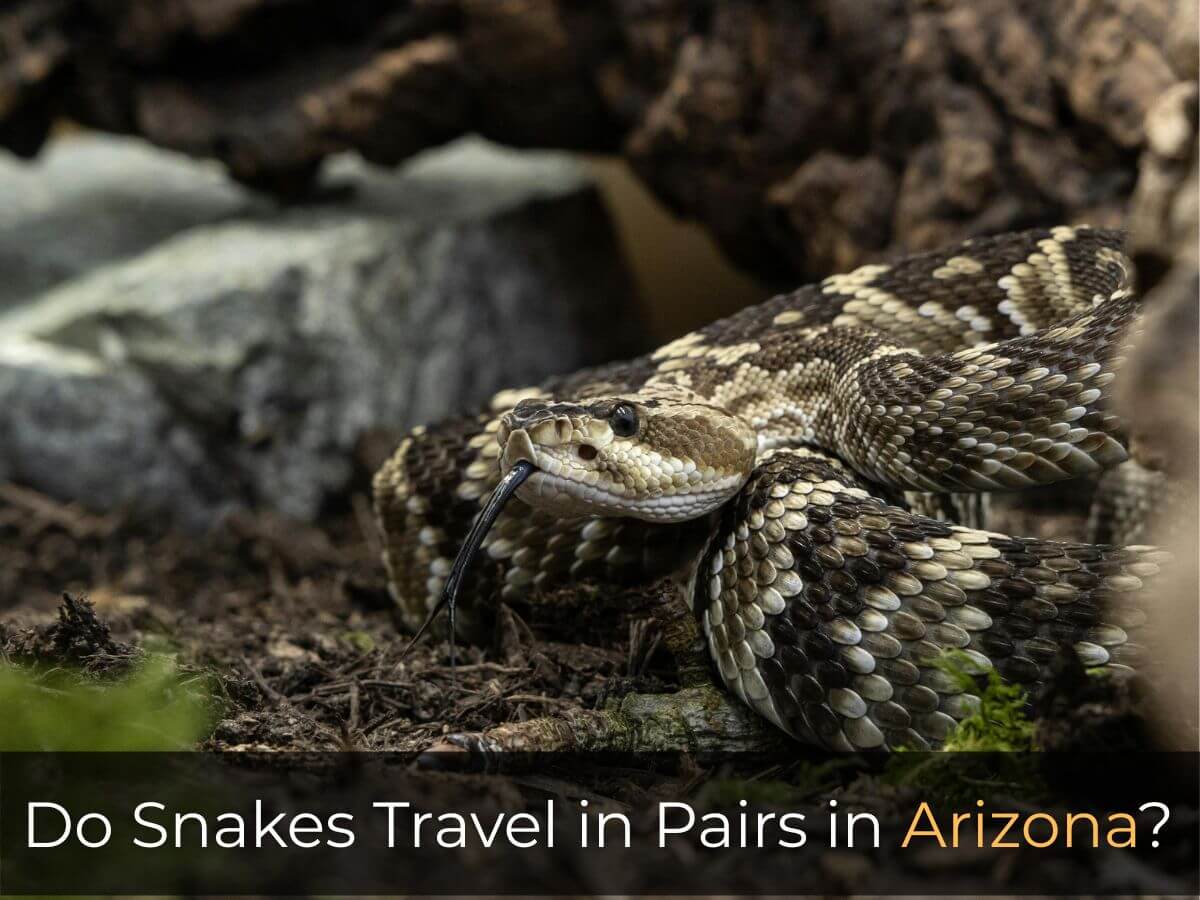
If you’ve ever spotted a snake near your home, especially in a place like Arizona, one thought tends to come immediately after- do snakes travel in pairs in Arizona? It’s a natural reaction. The moment you see one snake, your attention sharpens, your awareness increases, and your mind starts scanning for another.
For many homeowners, the fear isn’t just about the snake they saw – it’s about the possibility of more. People often wonder if snakes move together, if they stay close to each other, or if seeing one means there are others nearby waiting out of sight.
This concern is even more common in Arizona because of the environment. The desert landscape, warm climate, and natural habitat create ideal conditions for snakes to exist around residential areas. Over time, stories spread – neighbors talk, online posts circulate, and suddenly the idea that snakes travel in pairs starts to feel like a fact.
But the reality is very different.
Understanding whether snakes travel in pairs in Arizona is not just about curiosity – it directly affects how you respond when you see one. If you believe snakes move in groups, your reaction will be driven by fear. But if you understand their actual behavior, you can handle the situation calmly and correctly.
Many homeowners start wondering this after their first snake encounter. If you’re not sure how snakes even reach residential areas, this guide on do snakes enter houses in Arizona explains how and why it happens.
Do Snakes Actually Travel in Pairs?
Let’s get straight to the point.
Snakes do not travel in pairs.
This applies to most snake species, including those found throughout Arizona. Snakes are solitary by nature. They do not form partnerships, they do not move in coordinated groups, and they do not rely on companionship for survival.
Unlike animals that depend on social behavior – such as wolves, birds, or even some mammals – snakes operate independently. Their survival strategy is based on staying hidden, avoiding threats, and moving quietly through their environment.
They hunt alone.
They rest alone.
They defend themselves alone.
So when people ask if snakes travel in pairs, the answer is simple: no, that is not how snakes behave.
However, the confusion comes from real-world sightings that seem to suggest otherwise.
Why the “Snakes in Pairs” Myth Feels Real
Even though snakes don’t travel in pairs, many people strongly believe they do. This belief usually comes from personal experience rather than scientific understanding.
For example, someone might see one snake in their yard and then notice another one later that same day or week. It feels connected. It feels like the snakes are linked somehow.
But what’s actually happening is much simpler.
Snakes are drawn to environments that meet their needs. If your yard offers shade, shelter, or food, it can attract more than one snake over time. That doesn’t mean they arrived together or are traveling as a pair – it just means they are using the same space independently.
Another reason this myth feels real is timing. During certain seasons, snake activity increases. When more snakes are moving around, the chances of seeing multiple snakes also increase.
And then there’s human psychology.
Once you see one snake, your awareness changes. You become more alert, more focused, and more likely to notice another snake that you might have ignored before. This creates the illusion that snakes are appearing together.
In reality, most snake sightings are influenced by their environment rather than group behavior. If you want to understand where they tend to stay hidden, this article on rattlesnake hiding spots in Arizona gives a clear breakdown.
Situations Where You Might See Two Snakes Together
Even though snakes don’t travel in pairs, there are specific situations where you might see two snakes in close proximity.
The most common situation is mating season.
During this time, male snakes actively search for females. When they find one, they may stay nearby for a short period. This is one of the few times when two snakes may be seen together.
However, this is temporary behavior – not a long-term pairing.
Another situation is shared shelter.
If a location offers ideal conditions – such as a cool, shaded space with protection from predators – it may attract more than one snake. This is especially true in extreme climates like Arizona, where suitable shelter can be limited.
In these cases, snakes are not cooperating or interacting socially. They are simply using the same environment because it meets their needs.
You might also see multiple snakes during high activity periods, such as after rainfall or during cooler evenings. These conditions encourage movement, increasing the likelihood of encounters.
Snake activity often increases during certain weather conditions, especially after rainfall. This guide on why snakes come out after rain in Arizona explains why multiple sightings can happen in a short time.
Arizona Environment and Its Impact on Snake Behavior
Arizona’s climate plays a major role in shaping how snakes behave.
The desert environment creates extreme temperature conditions. During the summer, the ground becomes extremely hot, forcing snakes to seek cooler areas. This often brings them closer to human structures, including yards, garages, and shaded spaces.
At night, temperatures drop, making it easier for snakes to move. This is why many snake sightings happen during evening or nighttime hours.
Monsoon season also affects snake behavior. Increased moisture and environmental changes can lead to higher activity levels, which means more sightings.
In Arizona, many people are particularly concerned about rattlesnakes. These snakes are venomous and more noticeable due to their warning rattle. But even rattlesnakes follow the same basic rule – they do not travel in pairs.
They remain solitary, except for brief interactions during mating periods.
What It Really Means When You See One Snake
Seeing a single snake does not mean there are more nearby.
This is one of the most important points to understand.
A snake in your yard is usually just passing through or temporarily using the space. It is not a sign of an infestation or a group presence.
Snakes do not build nests like insects, and they do not live in colonies.
However, a sighting does tell you something important: your environment may be attractive to snakes.
This could be due to:
- Available shelter (rocks, debris, clutter)
- Food sources (rodents, insects)
- Water or moisture
- Cool, shaded areas
So while one snake doesn’t mean many, it does mean your space is worth evaluating.
A single sighting doesn’t always mean there are more nearby, but it does suggest your surroundings might be attractive to them. This guide on snake proofing your yard in Arizona shows how to reduce that risk effectively.
Are You at Risk If You See More Than One Snake?
If you happen to see multiple snakes in a short period, it’s understandable to feel concerned.
But this does not mean you are in immediate danger.
Multiple sightings usually indicate environmental conditions rather than snake behavior. If your property provides what snakes need, different snakes may pass through over time.
The key is not to panic, but to respond logically.
Observe patterns.
Check your surroundings.
Make adjustments where needed.
Most importantly, avoid assuming the worst.
In many cases, snakes are found closer to storage areas rather than living spaces. If you’ve ever worried about enclosed areas, this article on snakes in garage Arizona explains why garages are common spots.
How Snakes Choose Where to Go
Snakes don’t move randomly.
Their movement is influenced by very specific needs:
- Temperature regulation
- Access to food
- Availability of shelter
- Safety from predators
They follow paths that provide these conditions. This means that if your yard or home meets these needs, it may become part of their movement route.
But again, this is not about pairs or groups – it’s about environment.
How to Reduce Snake Encounters Around Your Home
The best way to deal with snake concerns is prevention.
Start with your outdoor space.
Keep grass trimmed and remove clutter. Wood piles, rocks, and debris create ideal hiding spots.
Control rodent populations. Snakes are attracted to food sources, so reducing prey reduces snake activity.
Seal gaps around your home. Even small openings can allow snakes to enter.
Improve lighting in outdoor areas. Snakes prefer dark, undisturbed spaces.
These steps don’t just reduce the chances of seeing one snake – they reduce the overall attractiveness of your property.
For medical safety and first aid recommendations, the Centers for Disease Control and Prevention offers clear guidance on how to respond to snake bites and when to seek emergency care.
What To Do If You See a Snake
If you encounter a snake, your reaction matters more than the situation itself.
Stay calm.
Do not approach or try to handle the snake.
Keep a safe distance and ensure others stay away.
In most cases, the snake will move on its own. Snakes avoid confrontation and prefer escape.
If the situation feels unsafe, contact a professional.
While encounters are rare, it’s still important to understand the risks. This guide on snake bite symptoms in Arizona explains what to watch for and when to seek medical help.
Why Understanding Behavior Reduces Fear
Fear often comes from misunderstanding.
When people believe snakes travel in pairs, every sighting feels more dangerous than it actually is.
But when you understand that snakes are solitary, the situation becomes more manageable.
You stop assuming the worst.
You start observing calmly.
You respond instead of reacting.
And that makes a huge difference.
For accurate and reliable information about snake behavior and safety in Arizona, you can refer to the Arizona Game and Fish Department, which provides official guidance on handling snake encounters and understanding their activity.
Final Thoughts
So, do snakes travel in pairs in Arizona?
No, they do not.
Snakes are solitary animals that live and move independently. Seeing two snakes in the same area is usually the result of environmental conditions, seasonal activity, or coincidence – not partnership.
Understanding this helps remove unnecessary fear and replace it with awareness.
In the end, the goal is not to eliminate every possible risk – that’s not realistic. The goal is to understand what’s actually happening so you can respond confidently.
And once you do that, the idea of snakes traveling in pairs stops being something to worry about.
FAQ
Do snakes travel in pairs in Arizona?
No, snakes are solitary and do not travel in pairs.
Why do I sometimes see two snakes together?
Usually due to mating season or shared shelter.
Do rattlesnakes stay together?
No, they live alone except briefly during mating.
Does one snake mean more are nearby?
Not necessarily.
Are snakes more active in certain seasons?
Yes, especially during warm months.
Should I worry about multiple sightings?
Stay cautious, but don’t assume infestation.
What attracts snakes to my yard?
Food, shelter, and temperature.
Do snakes live in groups?
No.
What should I do if I see one?
Keep distance and stay calm.
How can I prevent snakes?
Maintain yard and remove hiding spots.

Ravi Rathore is a field snake researcher and Arizona wildlife enthusiast who studies snake behavior, identification, and desert ecosystems. He focuses on helping hikers, homeowners, and outdoor explorers understand the difference between venomous and non-venomous snakes in Arizona. Through detailed guides and safety resources, he shares practical knowledge to help people stay safe while respecting native wildlife.