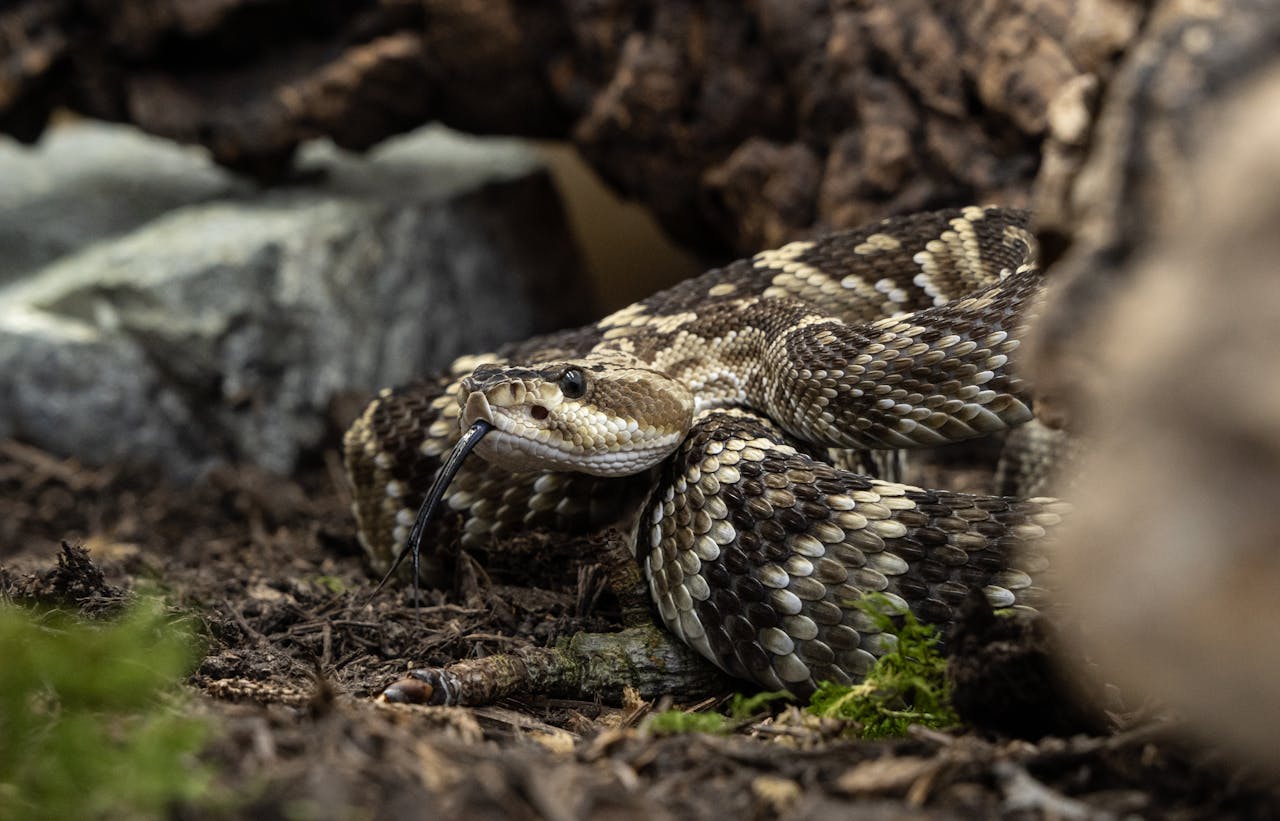
Rattlesnakes in Arizona are more common than most people think—especially if you hike, live near desert areas, or explore outdoor trails. Knowing how to identify them and stay safe can make all the difference.
But not all rattlesnakes are the same—some are far more dangerous than others.
Arizona holds the record for:
- The highest number of rattlesnake species in the United States
- Extreme habitat diversity
- Year-round snake activity in southern regions
From the low-elevation Sonoran Desert to high mountain forests near Flagstaff, rattlesnakes occupy nearly every ecological zone in the state.
Understanding these species is not about fear — it is about awareness, safety, and ecological respect.
How Many Rattlesnake Species Live in Arizona?
Arizona is home to:
- 13 recognized rattlesnake species
- Genera: Crotalus and Sistrurus
- The most species of any U.S. state
This diversity exists because Arizona contains:
- Elevation ranging from 70 feet to over 12,000 feet
- Desert, grassland, chaparral, and conifer forests
- Varied rainfall patterns
- Rocky terrain ideal for denning
Each species adapts to a specific ecological niche.
Rattlesnakes are an important part of Arizona’s desert ecosystem. They help maintain ecological balance by controlling rodent populations that could otherwise damage crops and spread disease. According to the Arizona Game & Fish Department, rattlesnakes play an important role in controlling rodent populations throughout the state.
Why Arizona’s Environment Supports Rattlesnakes
Rattlesnakes thrive in Arizona due to:
Climate
- Long warm seasons allow extended hunting periods
- Southern Arizona winters remain mild
- Snakes can remain active up to 8–9 months annually
Geology
- Rock crevices provide:
- Shelter from predators
- Protection from heat
- Winter den sites (hibernacula)
Food Supply
- Abundant rodent populations
- Desert pack rats
- Ground squirrels
- Small birds and lizards
Rattlesnakes are ambush predators and rely heavily on rodent density.
Complete List of Rattlesnakes in Arizona (With Scientific Names)
1. Western Diamondback Rattlesnake
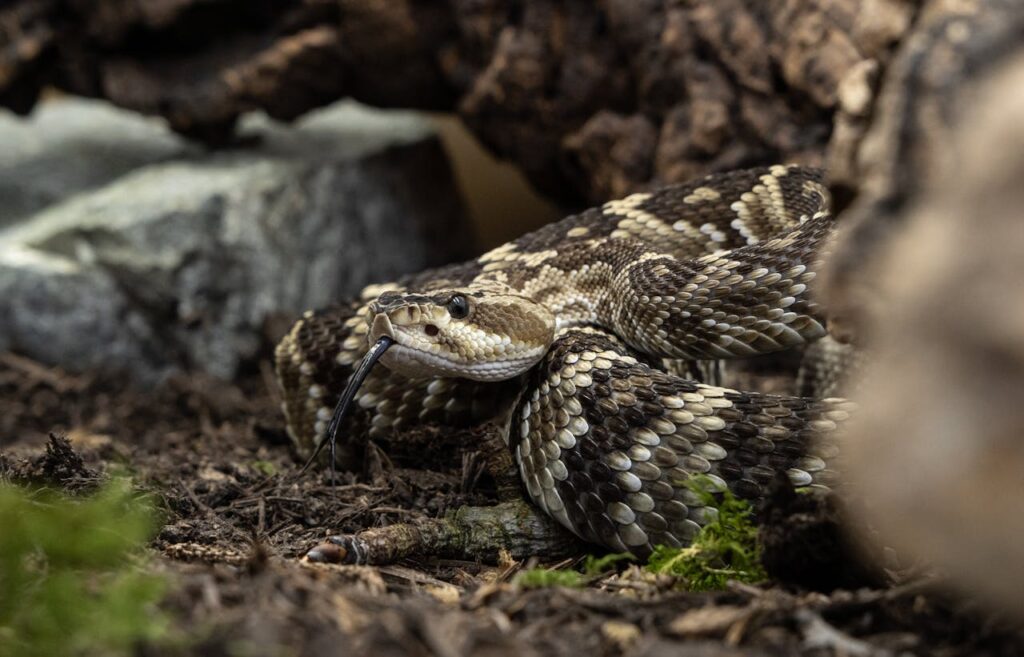
Scientific Name: Crotalus atrox
Overview
The Western Diamondback is:
- The most common rattlesnake in Arizona
- Responsible for the majority of snakebite incidents
- Highly adaptable to urban expansion
Identification Details
- Brown to gray body coloration
- Dark diamond-shaped dorsal patterns
- Distinct black and white tail bands
- Thick, muscular body
- Length: 3–5 feet (some exceed 6 feet)
The bold diamond pattern is the most reliable field identification feature.
Habitat
- Sonoran Desert
- Phoenix metropolitan areas
- Tucson region
- Agricultural lands
- Rocky hillsides
Behavior
- Defensive when cornered
- Loud, prolonged rattling
- Often found near homes built along desert edges
2. Mojave Rattlesnake
Scientific Name: Crotalus scutulatus
Overview
Often called the most dangerous rattlesnake in Arizona due to venom composition.
Identification
- Light green or olive coloration
- Similar body pattern to Diamondback
- Narrow white tail bands
- Average length: 2–4 feet
Venom Characteristics
The Mojave rattlesnake venom may contain:
- Neurotoxins (affect nervous system)
- Hemotoxins (affect blood and tissue)
This combination can cause:
- Muscle weakness
- Difficulty breathing
- Systemic symptoms
Immediate medical treatment is essential if bitten.
Habitat
- Western Arizona
- Open desert plains
- Scrubland ecosystems
3. Black-Tailed Rattlesnake
Scientific Name: Crotalus molossus
Identification
- Olive, yellow, or brown body
- Distinct solid black tail
- Medium build
- 2–4 feet in length
Habitat
- Central Arizona
- Foothills
- Canyon systems
- Higher elevation desert
Behavior
- Generally less defensive
- Prefers rocky elevations
- Often remains motionless when approached
4. Tiger Rattlesnake
Scientific Name: Crotalus tigris
Identification
- Small head compared to body
- Prominent rattle
- Dark tiger-like crossbands
- Typically under 3 feet
Venom
Despite its small size:
- Venom is highly potent
- Strong neurotoxic components
Habitat
- Southern Arizona
- Tucson region
- Rocky desert slopes
5. Sidewinder (Horned Rattlesnake)
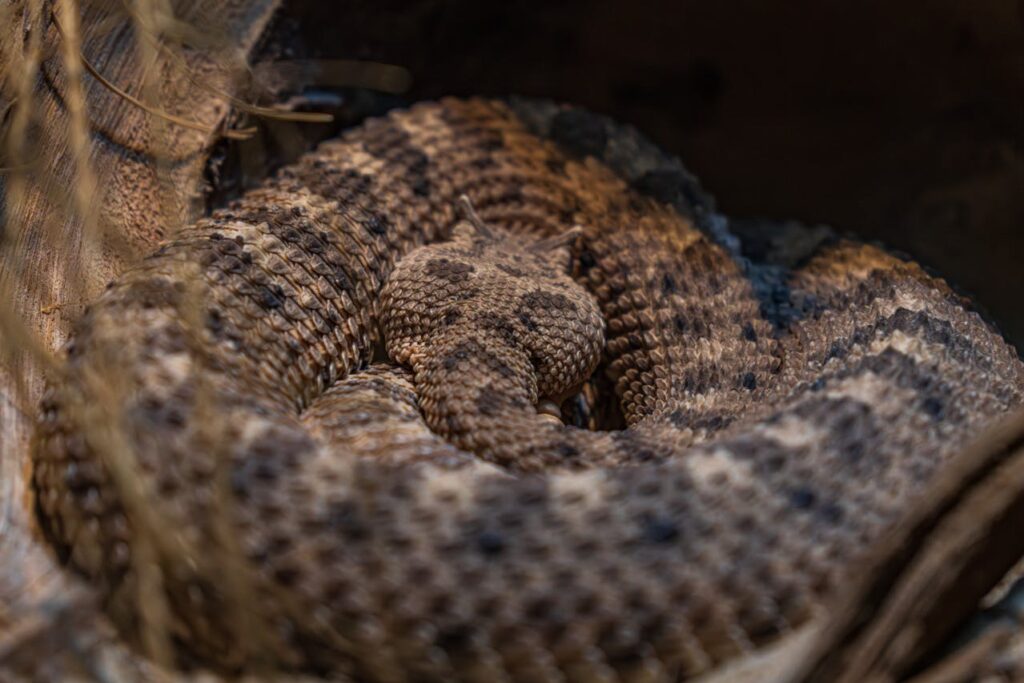
Scientific Name: Crotalus cerastes
Unique Adaptations
- Horn-like supraocular scales
- Sidewinding locomotion
- Heat-resistant body posture
Habitat
- Western Arizona deserts
- Sand dunes
- Open sandy flats
Sidewinding reduces contact with hot sand surfaces.
Additional Rattlesnake Species in Arizona
Arizona also includes:
- Crotalus mitchellii (Speckled Rattlesnake)
- Crotalus cerberus (Arizona Black Rattlesnake)
- Crotalus pricei (Twin-Spotted Rattlesnake)
- Crotalus willardi (Ridge-Nosed Rattlesnake)
- Crotalus lepidus (Rock Rattlesnake)
- Crotalus viridis (Prairie Rattlesnake)
- Sistrurus catenatus (Massasauga)
Each species differs in:
- Elevation preference
- Camouflage pattern
- Venom composition
- Behavioral response to threats
Seasonal Activity Patterns in Arizona
Spring (March–May)
- Peak activity
- Breeding season
- Increased trail sightings
Summer (June–August)
- Mostly nocturnal
- Active at dusk and nighttime
- Seek cool shelter near homes
Fall (September–October)
- Increased feeding
- Preparation for winter dens
Winter (November–February)
- Brumation in rocky dens
- Rare surface activity
Where Encounters Most Commonly Occur
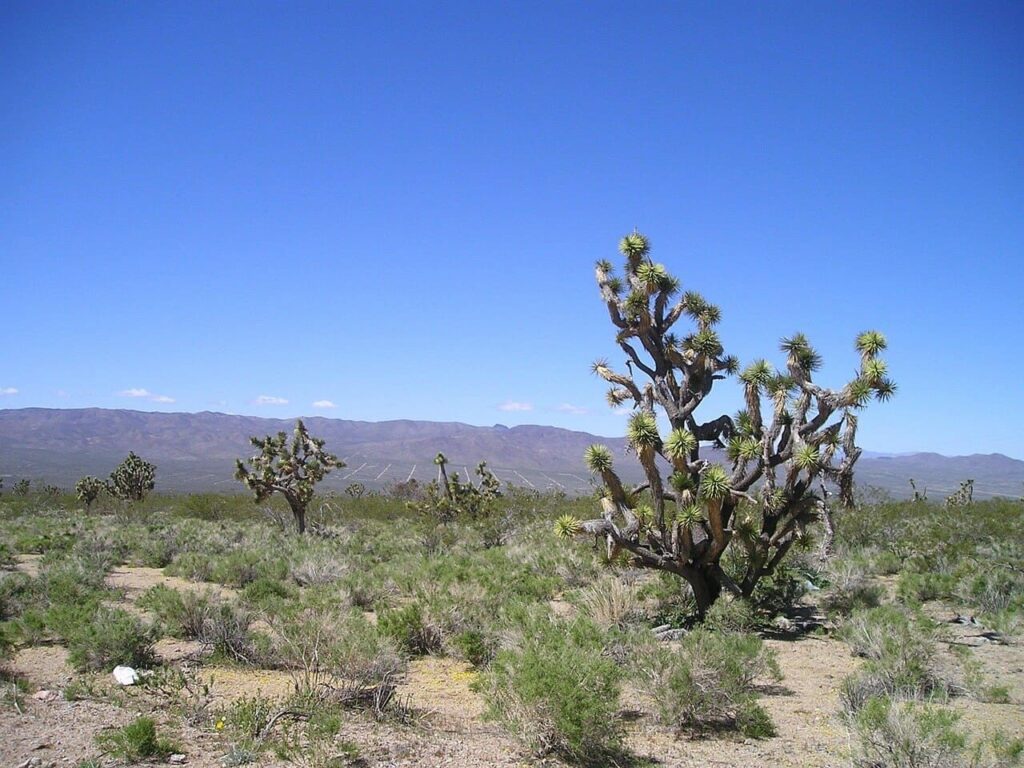
- Desert hiking trails
- Rock piles
- Dry washes
- Under shrubs
- Backyard landscaping
- Golf courses near desert preserves
Urban expansion into desert habitat increases interactions.
Rattlesnake Safety Guidelines for Arizona Residents
If you encounter a rattlesnake:
- Remain calm
- Do not make sudden movements
- Slowly increase distance
- Maintain 6+ feet of space
- Never attempt capture or killing
Most bites occur due to:
- Handling attempts
- Stepping directly on snake
- Pets provoking snake
Ecological Importance of Rattlesnakes
Rattlesnakes are apex mesopredators.
They:
- Control rodent populations
- Reduce disease spread
- Protect crops from rodent damage
- Maintain ecosystem balance
Removing rattlesnakes would increase rodent infestations significantly.
When Are Rattlesnakes Most Active in Arizona?
Rattlesnake activity in Arizona is strongly influenced by temperature, daylight hours, and seasonal changes.
Unlike colder states, Arizona’s climate allows rattlesnakes to remain active for much of the year.
Spring (March–May) – Peak Activity Season
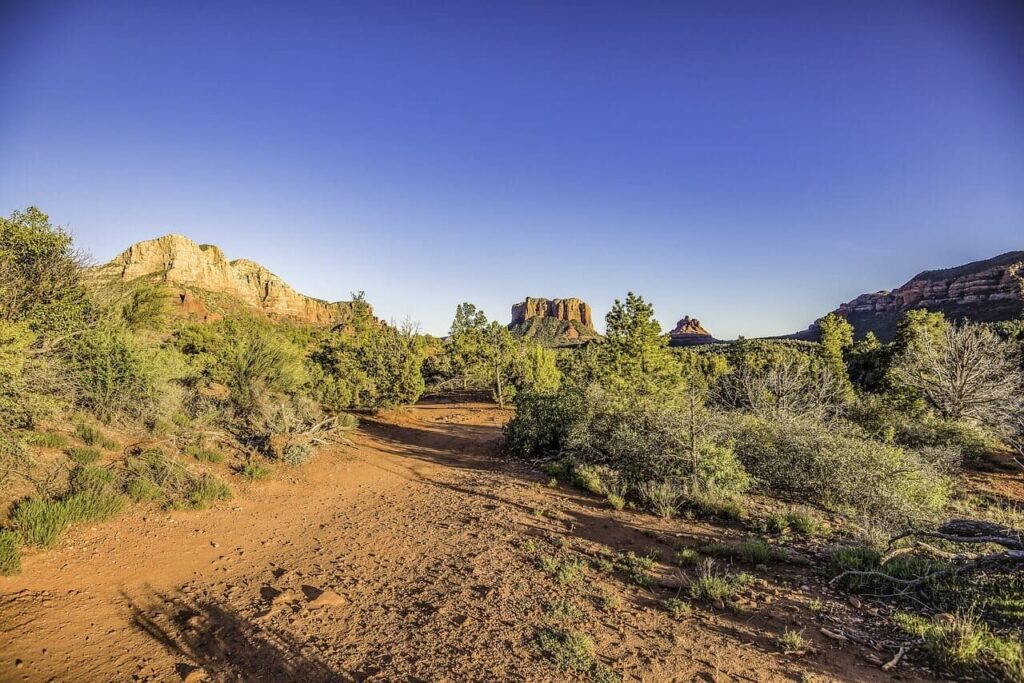
Spring is the most active season for rattlesnakes in Arizona.
During this period:
- Snakes emerge from winter dens (brumation sites)
- Breeding season begins
- Daytime temperatures become ideal (70–85°F)
- Hiking encounters increase dramatically
Why activity increases:
- Snakes need to feed after winter dormancy
- Males travel longer distances searching for females
- Desert trails warm up earlier in the day
This is when most hikers report sightings across Phoenix, Tucson, and Scottsdale areas.
Summer (June–August) – Nocturnal Shift
Arizona summers are extremely hot, often exceeding 110°F.
Because of this:
- Rattlesnakes become primarily nocturnal
- Activity increases at dusk and nighttime
- Snakes seek shade during the day
- They may rest under patios, vehicles, or landscaping
In suburban desert-edge neighborhoods:
- Encounters often happen at night
- Pets are at higher risk
- Flashlights are essential after dark
Fall (September–October) – Pre-Winter Feeding
Fall temperatures cool down.
Snakes become active again during daylight hours.
They:
- Increase feeding before winter
- Travel toward communal dens
- Are frequently seen on warm afternoons
This is another high-encounter season.
Winter (November–February) – Brumation
Rattlesnakes do not truly hibernate.
They enter brumation, a slowed metabolic state.
During winter:
- They gather in rocky dens
- Activity is minimal
- Warm sunny days may trigger brief surface appearances
Southern Arizona snakes may remain more active than northern populations.
How to Identify Rattlesnakes in Arizona
Correct identification is critical for safety.
Key Physical Features
All rattlesnakes in Arizona share these traits:
- Triangular-shaped head
- Heat-sensing pits between eyes and nostrils
- Vertical slit pupils
- Thick, muscular body
- Rattle at the tail tip
Important: Not all rattlesnakes rattle before striking.
Some may:
- Have broken rattles
- Remain silent
- Strike defensively without warning
Color & Pattern Clues
Because Arizona has multiple species, coloration varies:
- Brown, gray, olive, or reddish tones
- Diamond, banded, or speckled patterns
- Camouflage matching local terrain
Always observe:
- Tail band patterns
- Head shape
- Body thickness
Never rely on color alone.
Where You’re Most Likely to See Rattlesnakes
Rattlesnakes prefer areas that provide:
- Shelter
- Shade
- Food sources
- Rock cover
Common Encounter Locations
Hiking Trails
- Camelback Mountain
- South Mountain Park
- Saguaro National Park
- Desert preserves near Phoenix
Snakes may rest beside trails to absorb warmth.
Rock Piles & Boulder Fields
Rocky terrain provides:
- Protection from predators
- Cool hiding spaces
- Winter den sites
Never place hands into rock crevices.
Desert-Edge Neighborhoods
Urban expansion increases contact.
Snakes are often found:
- In backyard landscaping
- Under woodpiles
- Near rodent burrows
- Around irrigation systems
Homes built near natural desert habitat are most affected.
What to Do If You See a Rattlesnake
Your reaction determines your safety.
- Stop immediately and stay calm
- Do not make sudden movements
- Slowly step back and give space
- Keep at least 6 feet distance
- Never try to touch, move, or kill the snake
Most bites happen when people try to interact with the snake
Do NOT:
- Attempt to kill it
- Throw objects
- Use a stick
- Try to photograph at close range
Most bites occur when people attempt to handle or move the snake.
Rattlesnake Bite Risk in Arizona
Arizona records:
- Thousands of rattlesnake encounters yearly
- Several hundred reported bites
- Extremely low fatality rate due to modern antivenom
Who Is Most at Risk?
- Hikers stepping off trail
- Children playing in rocky areas
- Dogs investigating movement
- People gardening near desert edges
If Bitten:
- Call 911 immediately
- Keep victim calm
- Immobilize affected limb
- Remove jewelry or tight clothing
Do NOT:
- Cut the wound
- Apply tourniquet
- Use suction devices
- Apply ice
Rapid hospital treatment dramatically improves outcomes.
Myths About Rattlesnakes in Arizona
Many misconceptions increase fear and poor decisions.
Myth 1: Baby rattlesnakes are more dangerous.
Truth:
- Adults inject more venom
- Babies cannot control venom delivery well
- Both require medical treatment
Myth 2: Rattlesnakes always rattle first.
False.
- Some strike silently
- Rattles may be damaged
- Defensive strikes can happen quickly
Myth 3: They chase people.
False.
- They may move toward cover
- Defensive positioning may appear aggressive
- They do not hunt humans
Myth 4: All rattlesnakes are aggressive.
Reality:
- Most prefer to avoid confrontation
- Bites are defensive reactions
Rattlesnakes and Arizona Homes
Living in desert-edge communities increases snake encounters.
Why Snakes Enter Yards
- Rodent activity
- Water sources
- Shade structures
- Landscaping rocks
Prevention Strategies
- Remove debris piles
- Seal fence gaps
- Control rodent populations
- Trim dense shrubs
- Install snake fencing
- Keep pet food indoors
Pets are statistically at higher risk than humans.
Learn More About Arizona Snake Safety
- For a full breakdown of all dangerous species, see our guide to Venomous Snakes in Arizona.
- If you want to identify harmless backyard species, read Non-Venomous Snakes in Arizona.
- Planning a desert hike? Check out our Snake Safety Tips for Hikers.
Rattlesnakes are not aggressive animals looking to harm people. In most cases, they prefer to stay hidden or escape when approached. Many encounters in Arizona happen simply because people unknowingly step too close or disturb their natural habitat. Learning how to recognize and respect these snakes makes outdoor activities much safer and less stressful.
Frequently Asked Questions (FAQ)
How many rattlesnakes are in Arizona?
Arizona has 13 recognized rattlesnake species — more than any other U.S. state.
What is the most dangerous rattlesnake in Arizona?
The Mojave Rattlesnake is often considered the most dangerous due to its neurotoxic venom composition.
Are rattlesnakes common in Phoenix?
Yes. Especially in desert-edge neighborhoods and hiking preserves.
What time of day are rattlesnakes active?
Spring: daytime
Summer: nighttime
Fall: daytime
Winter: rarely active
Do rattlesnakes live in city neighborhoods?
Yes, particularly where urban development meets natural desert habitat.
Final Authority Statement
Rattlesnakes in Arizona are:
- Native wildlife
- Ecologically essential
- Defensive, not aggressive
- Adapted to extreme desert conditions
Understanding seasonal activity, identification features, and safety practices significantly reduces risk.
Education is the most powerful tool for coexisting safely with Arizona’s rattlesnakes.

Ravi Rathore is a field snake researcher and Arizona wildlife enthusiast who studies snake behavior, identification, and desert ecosystems. He focuses on helping hikers, homeowners, and outdoor explorers understand the difference between venomous and non-venomous snakes in Arizona. Through detailed guides and safety resources, he shares practical knowledge to help people stay safe while respecting native wildlife.