Mesa is one of the fastest-growing cities in Arizona, but despite modern neighborhoods and busy streets, the surrounding desert environment means wildlife is never too far away. Snakes in Mesa Arizona are a natural part of the Sonoran Desert ecosystem, and residents occasionally encounter them in backyards, parks, hiking trails, and desert preserves.
While the idea of seeing a snake can be frightening, the reality is that most species found in Mesa are not dangerous to humans. However, some venomous species—especially rattlesnakes—do live in the region, which makes it important for residents and outdoor enthusiasts to understand how to identify them and how to stay safe.
This guide explains the most common snakes in Mesa, which ones are dangerous, where they are usually found, and practical safety tips that can help reduce the risk of unwanted encounters.
Why Snakes Are Common in Mesa Arizona
Mesa sits within the Sonoran Desert, one of the most biologically diverse deserts in North America. The warm climate, rocky desert terrain, and abundance of small animals provide ideal conditions for snakes.
Several environmental factors make Mesa a natural habitat for snakes:
• Warm temperatures for most of the year
• Desert vegetation and rocky hiding spots
• Abundant prey such as rodents and lizards
• Nearby desert preserves and mountain areas
As Mesa continues to expand, many neighborhoods are being built closer to natural desert landscapes. This means it is not unusual for snakes to wander into residential areas while searching for food, water, or shelter.
Most Common Snakes in Mesa Arizona
Several snake species live in the Mesa area. Some are harmless and beneficial, while others require caution.
Western Diamondback Rattlesnake
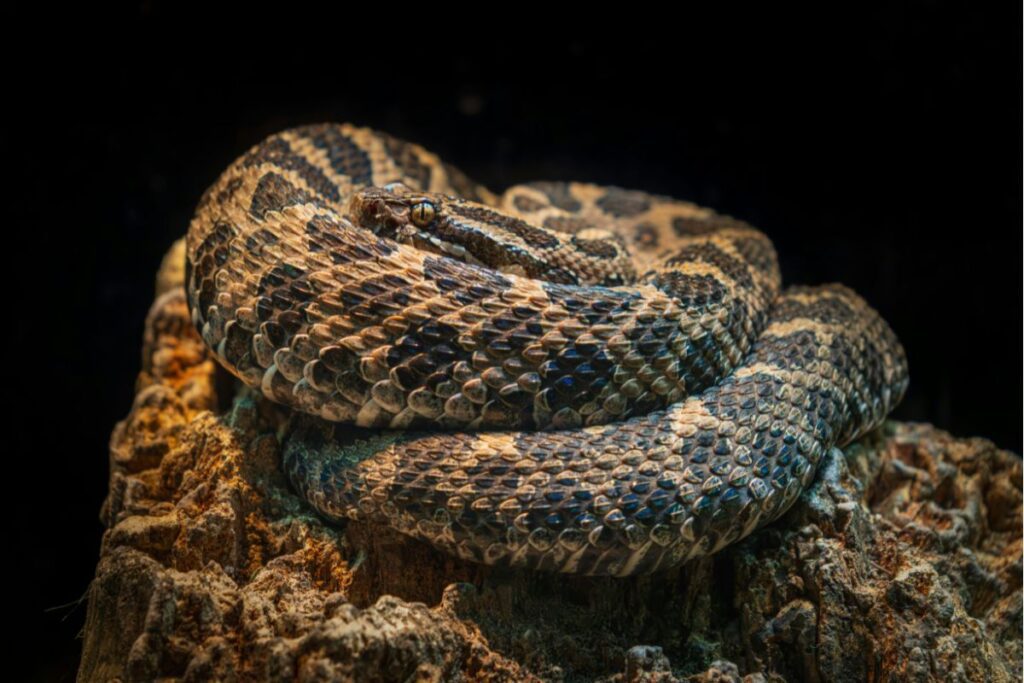
The Western Diamondback Rattlesnake is the most well-known venomous snake in Arizona and is responsible for most snakebite incidents in the state.
Key features include:
• Diamond-shaped patterns along the back
• Distinct rattle at the tail
• Thick, heavy body
• Usually gray or brown coloration
These snakes are often found in desert areas, rocky terrain, and sometimes near suburban neighborhoods that border natural land.
If threatened, they typically warn people by shaking their rattle before striking.
Mojave Rattlesnake
Another dangerous species found in parts of Arizona is the Mojave Rattlesnake, sometimes called the Mojave Green.
This snake is known for its potent venom and is considered one of the most medically significant snakes in North America.
However, Mojave rattlesnakes tend to live in more remote desert environments and are less commonly encountered in city neighborhoods.
Gopher Snake
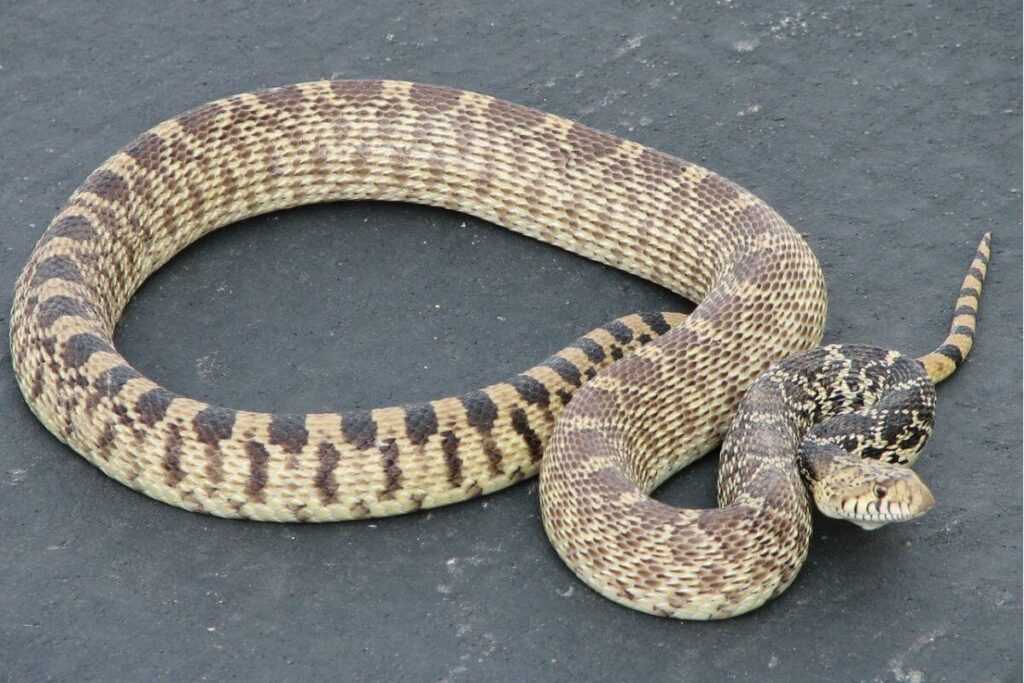
The Gopher Snake is one of the most common non-venomous snakes in Arizona and is frequently mistaken for a rattlesnake.
Although harmless, gopher snakes may flatten their heads and mimic rattlesnakes when threatened.
Helpful characteristics include:
• Long, slender body
• Brown blotches along the back
• No rattle on the tail
These snakes are actually beneficial because they help control rodent populations.
Kingsnake
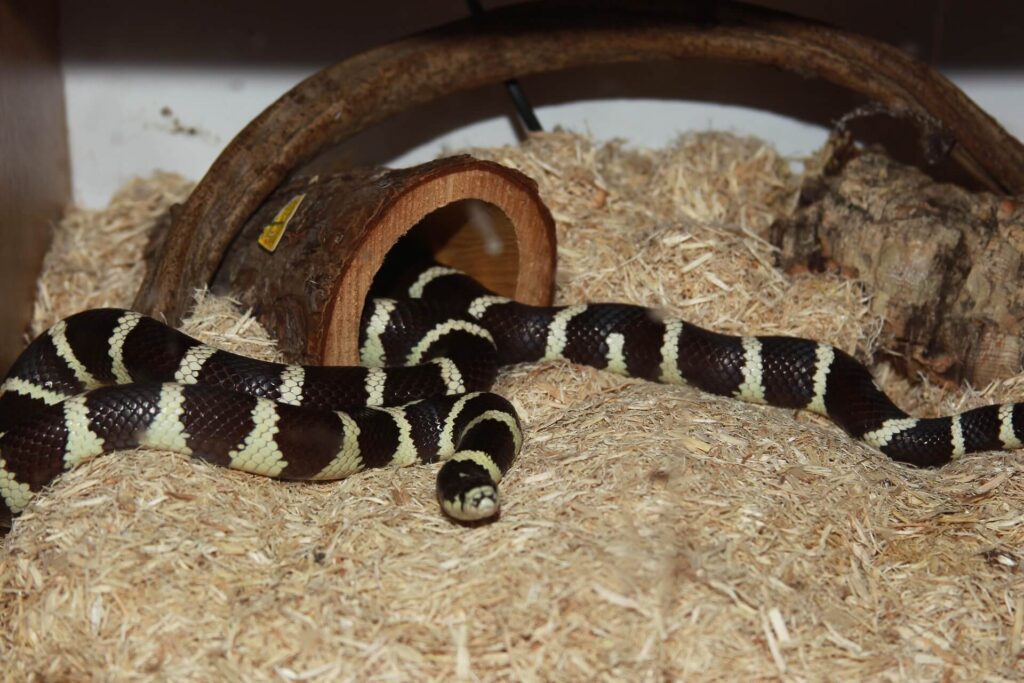
The Kingsnake is another harmless species often found in Arizona.
Kingsnakes are particularly useful in the ecosystem because they sometimes eat other snakes, including venomous ones.
They are typically recognized by their:
• Black and white banded pattern
• Smooth scales
• Calm behavior around humans
Are Snakes in Mesa Dangerous?
Many people worry that snakes in Mesa are a serious threat, but the truth is that snake encounters rarely result in bites.
Most snakes prefer to avoid humans and will retreat if given the chance.
However, caution is still important because venomous rattlesnakes do live in the area. Bites usually happen when someone accidentally steps on a snake or tries to handle it.
Understanding the difference between venomous and non-venomous species can help reduce unnecessary panic and improve safety.
Where Snakes Are Most Common in Mesa
Snake sightings are more likely in certain areas of the city, especially locations close to natural desert terrain.
Common places where snakes may appear include:
• Desert hiking trails
• Mountain foothills
• Parks near desert preserves
• Residential yards with desert landscaping
• Areas with rodent activity
Snakes are especially active during warm months when temperatures encourage hunting and movement.
When Snakes Are Most Active
Snake activity in Arizona usually increases during spring and summer when temperatures begin to rise.
Common activity patterns include:
• Early morning during warm seasons
• Evening or nighttime during hot summer days
• After rain when prey becomes active
Because Mesa has warm weather for much of the year, snakes can sometimes remain active longer than people expect.
Snake Safety Tips for Mesa Residents
Preventing snake encounters often comes down to simple awareness and good outdoor habits.
Here are practical safety tips for people living in Mesa:
1. Stay on Marked Trails
When hiking in desert areas, staying on established paths reduces the risk of accidentally stepping near a snake.
2. Watch Where You Step
Always pay attention to rocks, bushes, and shaded areas where snakes may rest.
3. Wear Protective Clothing
Boots and long pants provide extra protection when exploring desert terrain.
4. Keep Yards Clean
Removing debris, wood piles, and rodent attractants can reduce the chances of snakes entering your property.
5. Use Outdoor Lighting
Snakes may move around at night, so using a flashlight or outdoor lights can help avoid surprise encounters.
Mesa is located in the Sonoran Desert, where wildlife such as snakes naturally live. You can learn more about the city environment on the official City of Mesa website.
What to Do If You See a Snake
Seeing a snake can be surprising, but most situations can be handled calmly.
If you encounter a snake:
• Stay calm and avoid sudden movements
• Keep a safe distance
• Allow the snake to move away on its own
• Do not attempt to touch or capture it
Snakes generally leave once they feel safe to escape.
Snake Bite First Aid
Although snake bites are rare, knowing the correct response is important.
If someone is bitten:
• Stay calm and call emergency services immediately
• Limit movement to slow venom spread
• Keep the bite area at heart level
• Remove tight jewelry or clothing
Avoid outdated methods like cutting the wound, sucking venom, or applying ice.
Medical professionals can provide antivenom if necessary.
If you want to protect your yard and home, read our guide on how to keep snakes away in Arizona.
FAQ
Are snakes common in Mesa Arizona?
Yes. Mesa is located in the Sonoran Desert, which naturally supports several snake species.
What is the most dangerous snake in Mesa?
The Western Diamondback Rattlesnake is considered the most common venomous snake in the area.
Do snakes enter houses in Mesa?
It is rare, but snakes may enter yards or garages if they are searching for food, water, or shelter.
When are snakes most active in Mesa?
Snakes are usually most active during spring and summer, especially in early morning or evening hours.
Final Thoughts
Snakes are an important part of the desert ecosystem surrounding Mesa, Arizona. While encounters can happen occasionally, most snakes are not dangerous and prefer to avoid human contact.
By understanding which species live in the area and following simple safety precautions, residents and visitors can safely enjoy the natural beauty of the Sonoran Desert while respecting the wildlife that lives there.

Ravi Rathore is a field snake researcher and Arizona wildlife enthusiast who studies snake behavior, identification, and desert ecosystems. He focuses on helping hikers, homeowners, and outdoor explorers understand the difference between venomous and non-venomous snakes in Arizona. Through detailed guides and safety resources, he shares practical knowledge to help people stay safe while respecting native wildlife.