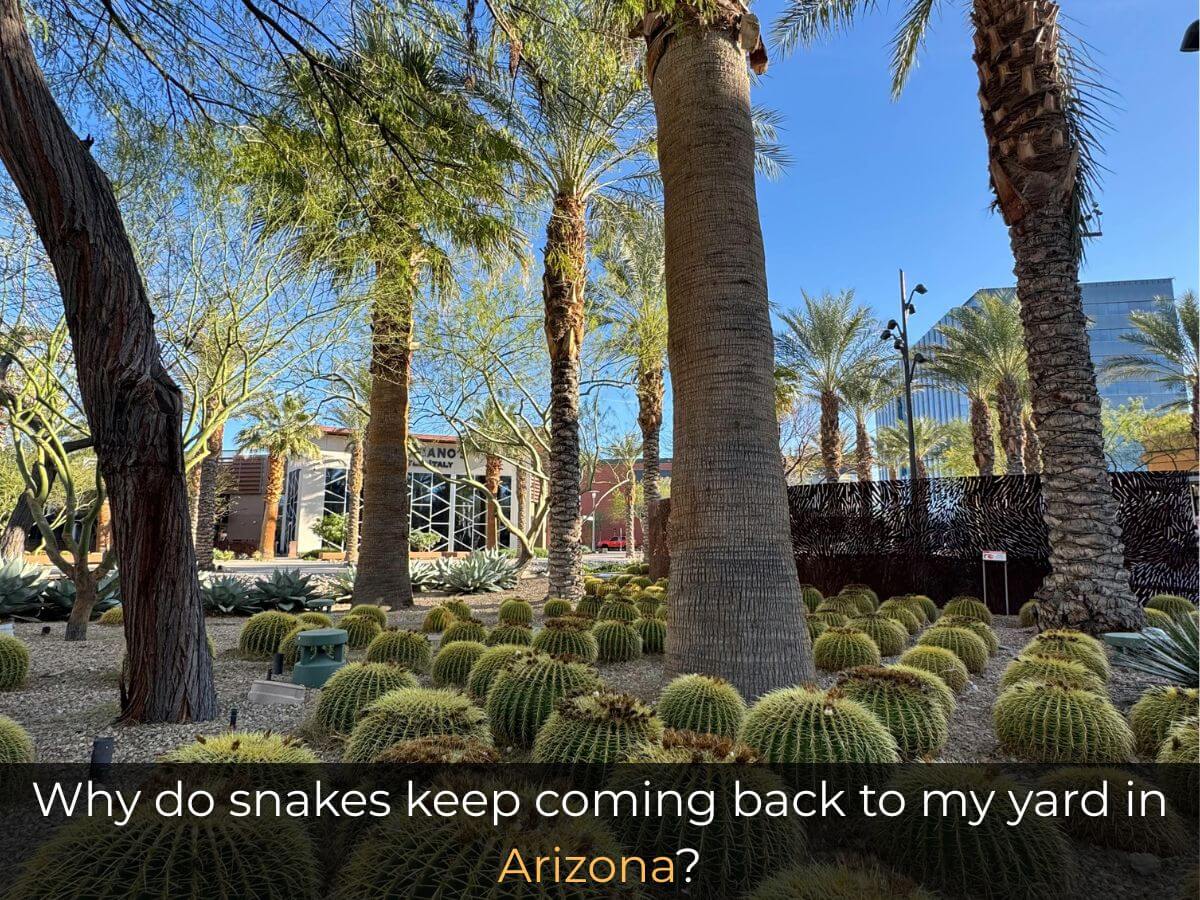
If you’ve ever had a snake show up in your yard, you already know how unsettling that moment feels. It doesn’t matter whether it was big or small – you notice it, your body reacts instantly, and suddenly your own yard doesn’t feel the same anymore.
But what really bothers most people isn’t just seeing one snake. It’s what happens after. A few days or weeks later, you see another one. And that’s when the real question starts to hit you – why do snakes keep coming back to my yard in Arizona?
At that point, it stops feeling like a coincidence. It feels like something is wrong with your space. You start looking around differently. You check corners more often. You hesitate before stepping outside at night. Even letting your dog out starts to feel like a decision instead of a routine.
The truth is, snakes are not randomly choosing your yard, and they’re definitely not coming back because they “like” your home. What’s really happening is much simpler – but also more important to understand. Your yard may be offering something they need, even if you don’t realize it yet.
And once you understand those reasons, everything changes. You stop guessing, and you start seeing the pattern.
Many homeowners start asking this question after repeated sightings. If you’re unsure how snakes even reach residential areas, this guide on do snakes enter houses in Arizona explains the most common entry situations.
It’s Usually Not the Same Snake (And That Changes Everything)

One of the first thoughts people have is: Is this the same snake coming back again and again?
It feels logical, right? You see one snake, then another later, so it must be the same one returning.
But in most cases, that’s not what’s happening.
Snakes don’t behave like pets or territorial animals. They don’t form attachments to places, and they don’t come back because they remember your yard. Instead, they move based on conditions – temperature, safety, and food availability.
What’s actually happening is that different snakes are being drawn to the same environment.
Think of it like this: if your yard consistently offers shelter, shade, and food, it becomes a “good spot” in the environment. Not just for one snake, but for any snake passing through that area.
So instead of thinking, “Why is this snake coming back?”
The better question is: “What is my yard providing that keeps attracting them?”
That shift in thinking is where real solutions begin.
In many cases, snakes are actually following prey like rodents. This detailed guide on snake proofing your yard in Arizona explains how to remove the conditions that attract both rodents and snakes.
The Biggest Reason: Your Yard Might Be Feeding Them (Indirectly)
This is the part most homeowners completely miss.
Snakes are not coming for you. They are coming for food.
And in Arizona yards, that usually means one thing – rodents.
You might not even realize they’re there. Many people don’t. Mice and rats can live quietly in small spaces, especially around:
- Stored items
- Garbage areas
- Outdoor storage
- Walls and fences
- Under decks or sheds
Even a small rodent presence can attract snakes. You don’t need an infestation – just consistent activity.
Here’s the chain reaction:
- Food scraps or clutter attract rodents
- Rodents create movement and scent trails
- Snakes follow that activity
So when you see a snake, it’s often not the beginning of the problem – it’s a sign of something already happening.
And if that food source stays, the pattern continues.
Shelter: Why Your Yard Feels Like a Safe Place
Now let’s talk about the second major reason – shelter.
Arizona heat is intense. During the day, surfaces get extremely hot, and animals look for places to escape that heat.
Your yard, without you realizing it, may be offering perfect shelter.
Snakes look for:
- Shade
- Cool surfaces
- Hidden spaces
- Protection from predators
Common areas include:
- Rock piles
- Bushes and shrubs
- Wood stacks
- Storage corners
- Gaps along walls
From your perspective, these areas may look normal – or even neat. But from a snake’s perspective, they are ideal hiding spots.
And once a place feels safe, it becomes part of their movement pattern.
Snakes often stay hidden during the day. This article on rattlesnake hiding spots in Arizona shows the most common places where they rest and avoid heat.
Why Removing One Snake Doesn’t Fix Anything
This is where most people get frustrated.
You remove one snake, or it leaves on its own, and you feel relieved. But then another one appears later.
That’s because the environment hasn’t changed.
If the food source is still there…
If the shelter is still there…
If access is still easy…
Then your yard is still a suitable location.
Removing the snake is like removing a symptom. The cause is still there.
And until the cause changes, the pattern continues.
The Role of Small Details (That Most People Ignore)
Here’s something important – snake activity is often influenced by small details, not big problems.
Things like:
- Leaving items directly on the ground
- Letting plants grow too dense
- Ignoring corners you rarely check
- Keeping outdoor storage cluttered
Individually, these don’t seem like major issues.
But together, they create an environment that feels safe, quiet, and undisturbed.
And that’s exactly what snakes prefer.
Nighttime Changes Everything
Many people don’t realize how different the environment becomes at night.
During the day, heat limits movement. But once the sun goes down:
- Surfaces cool down
- Air becomes more comfortable
- Wildlife becomes active
Snakes are much more likely to move at night, especially in summer.
So if your yard feels calm during the day but you’re seeing activity later, that’s not unusual – it’s part of natural behavior.
Why Fear Builds Up After Repeat Sightings
After one encounter, most people are just surprised.
After multiple encounters, it turns into stress.
You start:
- Looking around more often
- Feeling uneasy in your own yard
- Thinking about worst-case scenarios
This is completely normal.
But the key is understanding that the situation is pattern-based, not random.
Once you see the pattern, you gain control.
What Actually Stops Snakes from Coming Back
This is the part that matters most.
You don’t need extreme solutions. You don’t need expensive tools.
You need consistency.
Remove Food Sources
Control rodents and avoid leaving anything that attracts them.
Reduce Shelter
Trim plants, remove clutter, and open up hidden areas.
Seal Entry Points
Close gaps under fences and along walls.
Keep the Yard Active
Snakes prefer quiet spaces. Regular activity discourages them.
Check Regularly
Awareness is your best tool.
Seasonal Behavior in Arizona (Important)
Snake activity is not constant all year.
Summer
They look for cooler places – yards become attractive.
Monsoon Season
Movement increases due to environmental changes.
Nighttime
Peak activity due to lower temperatures.
Understanding these patterns helps you stay one step ahead.
Seasonal changes also play a role in snake activity. You can understand this better in this guide on why snakes come out after rain in Arizona, especially during monsoon periods.
The Truth Most People Realize Over Time
People who live in Arizona for years eventually understand something simple:
Snakes are part of the environment – but they are not constantly present.
Most encounters are temporary.
Most problems can be reduced.
And most fear comes from not understanding what’s happening.
Once you understand, things feel different.
What Usually Happens Before You Even Notice a Snake
Most people think the problem starts the moment they see a snake. But in reality, the situation usually begins long before that first sighting.
Think about your yard over the past few weeks or months. There may have been small changes that didn’t seem important at the time – maybe a few more insects around lights, maybe some clutter building up in a corner, or even a slight increase in rodent activity that went unnoticed.
Snakes don’t suddenly appear without a reason. They follow patterns. And those patterns often start quietly.
For example, a mouse might start using a storage area in your yard. It finds food, shelter, and safety. Over time, more activity builds up. You might not see it directly, but it’s there. Then, at some point, a snake passes through the area and detects that activity.
From the snake’s perspective, this isn’t your yard – it’s a place with food and shelter.
By the time you actually see the snake, the environment has already been suitable for a while.
That’s why it can feel sudden to you, even though it’s part of a gradual buildup.
Many sightings happen closer to home than people expect. This guide on snakes in garage Arizona explains why shaded, quiet spaces attract snakes.
Why Some Yards Get More Snake Activity Than Others
You might notice something interesting in your neighborhood – some homes rarely deal with snakes, while others seem to have repeated sightings.
This doesn’t always come down to luck.
Two houses can be right next to each other, but small differences in layout and maintenance can create very different conditions.
For example:
- One yard might have dense bushes along the fence line, while the other keeps that area clear
- One homeowner may store items directly on the ground, while another keeps everything elevated
- One yard may have hidden rodent activity, while the other doesn’t
These differences may seem minor, but to a snake, they completely change how safe or attractive a space feels.
This is why comparing your yard to others can actually help you identify what might be contributing to the issue.
The “Comfort Zone” Effect Most People Don’t Realize
There’s a concept that explains repeat snake activity very well – it’s what you could call a “comfort zone.”
If a snake moves through your yard and finds:
- A place to hide
- A source of food
- No immediate threat
it registers that area as safe during that moment.
Now, even though that specific snake may not return, the same conditions remain for other snakes passing through the area.
So your yard becomes part of a larger movement pattern in the environment – not a permanent home, but a reliable stop along the way.
This is why activity can feel repeated, even if it’s not the same snake.
For accurate and official information about snake behavior and safety in Arizona, you can refer to the Arizona Game and Fish Department, which provides trusted guidance on wildlife activity and how to safely handle snake encounters.
Why Clean Yards Still Get Snakes (Important Reality)
This is something that confuses a lot of homeowners.
You clean your yard. You remove clutter. Everything looks organized. And yet – you still see a snake.
At that point, it feels like you’re doing everything right but still facing the problem.
The reality is that “clean” doesn’t always mean “unattractive.”
Even a clean yard can have:
- Natural shade
- Nearby food sources (like rodents from neighboring areas)
- Entry points through fences or gaps
- Proximity to open land or desert
So while cleaning helps reduce risk, it doesn’t eliminate it completely.
That’s why the goal is not perfection – it’s reduction.
How Nearby Areas Affect Your Yard More Than You Think
Your yard doesn’t exist in isolation.
Even if you maintain it perfectly, nearby areas can still influence what happens.
For example:
- An empty lot nearby may have high rodent activity
- A neighbor’s yard may have clutter or dense vegetation
- Natural desert areas can act as a source of movement
Snakes don’t recognize property lines. They move through environments based on conditions, not boundaries.
So sometimes, the reason snakes appear in your yard has less to do with what you’re doing and more to do with what’s happening around you.
This doesn’t mean you’re powerless – it just means awareness should extend beyond your immediate space.
For additional information on wildlife and environmental behavior, the National Park Service offers helpful insights into how animals interact with residential areas.
What Happens After You Disturb a Snake Once
Here’s something interesting – after a snake encounter, people often assume the snake will avoid that area in the future.
But that’s not always how it works.
If a snake is disturbed and leaves, it doesn’t necessarily mean the area is now “off-limits.” If the conditions are still suitable, another snake can still pass through later.
The disturbance is temporary, but the environment remains.
That’s why long-term changes matter more than one-time events.
Why Some People See Snakes Only Once (And Others Repeatedly)
This comes down to consistency.
People who only see a snake once often have yards that don’t consistently support the three key factors:
- Food
- Shelter
- Safe environment
Maybe a snake passed through once, but didn’t find enough reason to stay or return.
On the other hand, repeated sightings usually mean those conditions are consistently present.
This doesn’t mean your yard is “bad” – it just means it’s stable enough to attract wildlife occasionally.
The Role of Water in Snake Activity
Water is something many people don’t think about, but it plays a role.
In Arizona, water sources are limited in natural environments. So when water is available in residential areas, it can influence wildlife movement.
Examples include:
- Irrigation systems
- Pet water bowls left outside
- Pools or damp areas
- Leaky hoses or pipes
Water attracts insects and small animals, which then attract snakes.
Again, it’s not direct – it’s part of a chain.
Small Daily Habits That Make a Big Difference
You don’t need major changes to reduce snake activity. Often, it’s small habits that have the biggest impact over time.
Things like:
- Taking a quick look around before letting pets outside
- Avoiding leaving clutter in corners
- Keeping storage slightly elevated
- Checking less-used areas regularly
These actions don’t take much time, but they reduce the chances of surprise encounters.
Why Awareness Is More Effective Than Fear
Fear makes every situation feel bigger than it is.
Awareness, on the other hand, gives you control.
When you understand:
- Why snakes appear
- What attracts them
- How they move
the situation becomes predictable instead of stressful.
You don’t react emotionally – you respond practically.
And that shift is what separates constant worry from confident control.
Final Thoughts
Let’s come back to the original question one last time:
Why do snakes keep coming back to my yard in Arizona?
Because your yard, at some level, is meeting their needs – even if only temporarily.
But the important part is this:
That can be changed.
Not through extreme measures, not through fear, but through simple awareness and small adjustments.
You don’t need to completely transform your space. You just need to understand how it’s being used by the environment around you.
Once you do that, the pattern becomes clear.
And when the pattern becomes clear, the solution becomes simple.
FAQ
Why do snakes keep coming back to my yard in Arizona?
Because your yard provides food, shelter, or a safe environment.
Is it the same snake returning?
Usually not.
What attracts snakes the most?
Rodents and hiding spots.
Can clean yards still attract snakes?
Yes, if conditions exist.
Do snakes live in yards permanently?
Mostly no.
When are they most active?
Night and summer.
Do repellents work?
Not reliably.
How do I stop them?
Remove food and shelter.
Should I worry?
Stay aware, not fearful.
Are repeat sightings common?
Yes, if conditions stay the same.

Ravi Rathore is a field snake researcher and Arizona wildlife enthusiast who studies snake behavior, identification, and desert ecosystems. He focuses on helping hikers, homeowners, and outdoor explorers understand the difference between venomous and non-venomous snakes in Arizona. Through detailed guides and safety resources, he shares practical knowledge to help people stay safe while respecting native wildlife.