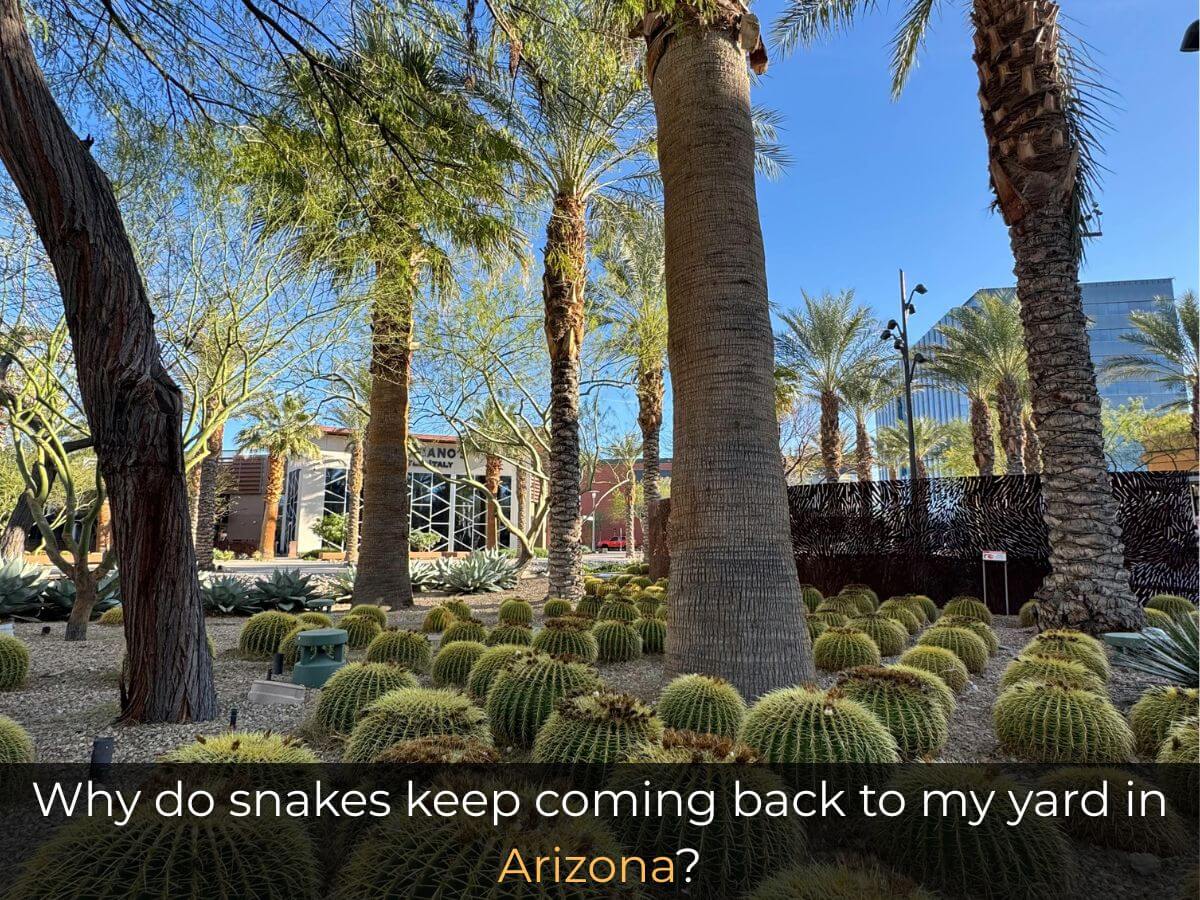
Why do snakes keep coming back to my yard in Arizona? Repeated sightings can happen when snakes regularly move through the surrounding area or find suitable food and shelter nearby. It does not necessarily mean the same snake is returning or that your yard has a snake infestation.
Rodents, dense vegetation, rock piles, stored materials, and gaps around structures can all affect how wildlife uses a property. Nearby desert habitat, washes, and undeveloped land can also influence which animals pass through a neighborhood.
The most useful response is to look for conditions you can manage, reduce opportunities for hiding and prey activity, and know what to do if you encounter a snake.

Why You May Keep Seeing Snakes in the Same Yard
Repeated snake sightings do not necessarily mean the same snake is returning. Without identifying or tracking an individual snake, it is usually impossible to know whether separate sightings involve the same animal.
Several snakes may pass through the same property because they share the surrounding habitat. Alternatively, one snake may be seen more than once as it moves through the area. Neither situation automatically means the snake has established a permanent home in the yard.
Look for patterns rather than assuming the snake itself is the problem. Are sightings happening near the same fence, storage area, or patch of vegetation? Have you noticed rodents, burrows, or other signs of wildlife? Are there nearby open spaces or natural habitat that could explain animals moving through the neighborhood?
These observations can help you identify conditions worth addressing. Removing or relocating one snake does not remove those conditions, so another snake may still pass through later.
In many cases, snakes are actually following prey like rodents. This detailed guide on snake proofing your yard in Arizona explains how to remove the conditions that attract both rodents and snakes.
Snakes often stay hidden during the day. This article on rattlesnake hiding spots in Arizona shows the most common places where they rest and avoid heat.
Where Snakes Find Shelter in Arizona Yards
Yards can offer snakes temporary shelter from weather, predators, and disturbance. Common places to inspect include:
- Dense shrubs and groundcover
- Rock piles and stacked firewood
- Unused materials and clutter stored on the ground
- Gaps beneath sheds, decks, or other structures
- Areas around walls and fences where vegetation has grown thick
Not every shaded or cluttered area contains a snake. These features simply make it harder to see what is there and may provide shelter for wildlife.
Keep frequently used paths clear, store materials neatly, and avoid reaching blindly into spaces you cannot see. If you need to move heavy materials or inspect a suspected hiding place, do not put your hands into concealed gaps. Keep your distance if you see a snake.
When Are Snakes Active Around Arizona Homes?
Snake activity varies with species, temperature, season, and local conditions. During hot weather, some snakes may be more active during cooler parts of the day or after sunset. Other species and circumstances can produce different patterns.
Warm months often bring more opportunities to encounter active snakes, but there is no single schedule that applies to every Arizona snake. Rain and changes in weather may also influence wildlife movement.
Use a flashlight when walking outside after dark, watch where you step, and avoid reaching into places you cannot see. Do not assume that a yard is free of snakes simply because you have not seen any during the day.
How to Reduce Snake Activity Around Your Yard
You cannot guarantee that snakes will never enter your yard, but you can reduce some of the conditions that make wildlife encounters more likely.
- Reduce rodent activity: Secure garbage and animal feed, clean up spilled food, and address signs of rodents.
- Remove unnecessary clutter: Keep wood, building materials, and stored items organized rather than leaving piles undisturbed on the ground.
- Maintain vegetation: Trim overgrown areas where appropriate, especially along regularly used paths and near entrances.
- Inspect structures: Repair suitable gaps around sheds and other buildings. Remember that sealing a gap does not remove a snake that may already be inside.
- Manage water sources: Fix leaking hoses or irrigation lines and keep outdoor water areas maintained.
- Protect pets and children: Supervise them outdoors and keep them away from any snake you encounter.
- Improve visibility: Use a flashlight at night and avoid stepping into dense vegetation or reaching into hidden spaces.
Snake repellents and home remedies should not be treated as guaranteed solutions. If sightings continue or a snake is in a place where people cannot safely avoid it, contact a qualified wildlife professional.
What to Do If You See a Snake in Your Yard
Stop and give the snake plenty of space. Keep children and pets away, and do not try to catch, kill, corner, or move it. Many bites occur when people approach or attempt to handle snakes.
If the snake can move away without being disturbed, leave it alone. If it is near a doorway, inside a building, or in a location where people cannot safely avoid it, contact a qualified wildlife removal professional.
If someone is bitten, seek emergency medical care immediately. Do not delay treatment to identify or capture the snake.
Why Nearby Habitat and Clean Yards Both Matter
Two neighboring properties can experience different levels of snake activity because their landscaping, storage, prey availability, and surroundings differ. Dense vegetation or clutter may create more hiding places on one property, while another yard may be easier to inspect.
However, a tidy yard is not guaranteed to be snake-free. Snakes may travel through residential areas from nearby desert habitat, washes, open land, or other suitable environments. They can also pass through a property without finding a reason to remain there.
Focus on the conditions you can manage rather than assuming every sighting means something is wrong. Keep vegetation maintained, reduce clutter, address rodent activity, and inspect areas where people and pets regularly walk. These measures can reduce some risks, but they cannot prevent every encounter with wildlife.
Why Rodents and Other Food Sources Can Attract Snakes
Snakes eat different types of prey depending on the species. Many Arizona snakes eat rodents, while others feed on lizards, insects, or other animals. A yard with accessible prey may therefore be part of a snake’s normal foraging area.
Look for conditions that may support prey animals, including spilled birdseed, unsecured garbage, pet food left outdoors, and cluttered storage areas. Rodents may shelter around sheds, walls, woodpiles, or other protected spaces.
Standing water, leaking irrigation lines, and outdoor pet bowls can also provide water for wildlife. Water alone does not prove that snakes will visit, but it can contribute to activity by other animals in the area.
To reduce these opportunities, secure garbage, clean up spilled food, store animal feed properly, fix water leaks, and address rodent activity using safe, appropriate methods. Avoid leaving pet food outside overnight when practical.
Final Thoughts
Repeated snake sightings in Arizona can result from nearby habitat, available prey, shelter, or wildlife moving through the neighborhood. The sightings do not necessarily involve the same snake, and they do not prove that snakes are living permanently in your yard.
Reduce rodent activity, keep storage and vegetation manageable, and make paths easier to inspect. If you see a snake, keep your distance and protect pets and children from approaching it. These steps help you manage the risk without assuming that every sighting can be prevented.

Ravi Rathore is a field snake researcher and Arizona wildlife enthusiast who studies snake behavior, identification, and desert ecosystems. He focuses on helping hikers, homeowners, and outdoor explorers understand the difference between venomous and non-venomous snakes in Arizona. Through detailed guides and safety resources, he shares practical knowledge to help people stay safe while respecting native wildlife.