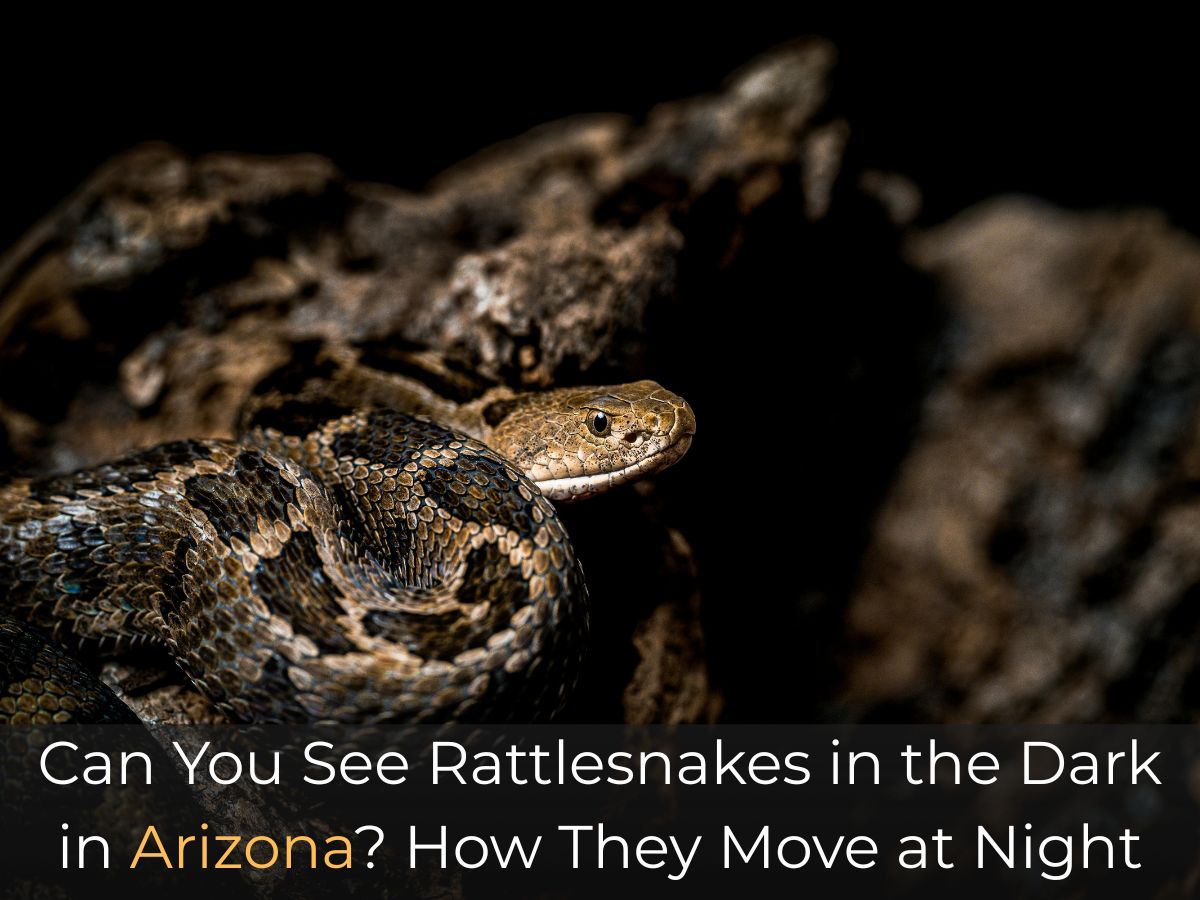
Rattlesnakes can be difficult to spot after dark in Arizona, especially when they blend into dirt, rocks, dry vegetation, and other surroundings. If you walk your dog, take out the trash, or spend time outside at night, reduced visibility can make it harder to notice a snake before getting too close.
Understanding how nighttime conditions affect visibility – and knowing how to use a flashlight and keep your distance – can help reduce the chance of an accidental encounter. snakes, especially rattlesnakes, are more active at night. And once that idea settles in your mind, the next question doesn’t take long to appear: can you see rattlesnakes in the dark in Arizona, or are they basically invisible when the sun goes down?
It’s not just a random curiosity. This question usually comes from very real situations. Maybe you step outside at night to take out the trash. Maybe you walk your dog in the evening when the heat drops. Or maybe you’re sitting outside enjoying the cooler air and suddenly realize you’re not really looking at the ground the way you would during the day.
Yes, you can see rattlesnakes at night in Arizona when there is enough light to distinguish them from their surroundings. In darkness or dim lighting, their camouflage can make them difficult to detect.
If you’re wondering about nighttime visibility, it also helps to understand when snakes are most active. This guide on what time of day rattlesnakes are most active in Arizona explains their daily behavior patterns.
Can You See Rattlesnakes in the Dark in Arizona? (The Honest Answer)
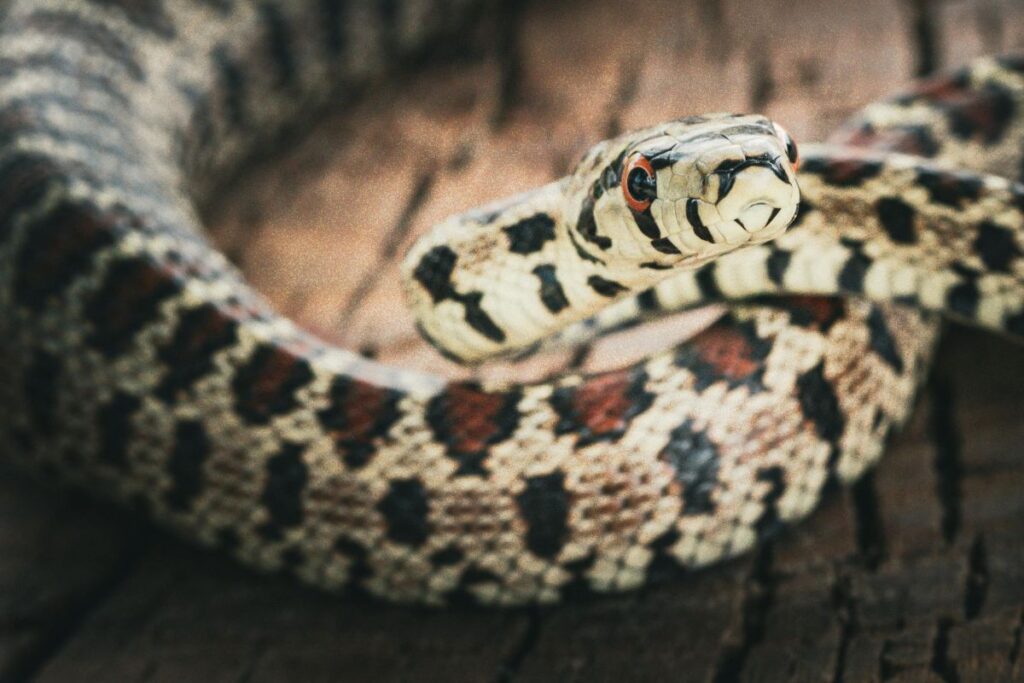
A flashlight or other light source can make a rattlesnake easier to see, but visibility depends on the distance, lighting conditions, and how well the snake blends into its surroundings.
Many people notice snakes closer to homes at night. This article on why do snakes come into houses in Arizona explains how and why that happens.
Do Rattlesnakes Glow or Reflect Light in the Dark?
This is one of the most common myths and it’s important to clear it up.
Rattlesnakes do not glow in the dark. Their eyes may reflect some light under certain conditions, but you should not rely on eye shine to locate a snake.
Even if a snake’s eyes reflect a flashlight, the reflection may not be visible from every angle or distance. Directly illuminating the ground is a more reliable way to check your path.
If you shine a flashlight directly on one, you might notice:
- The shape of its body
- Slight differences in texture
- Subtle movement
But without that light, there is nothing about the snake that makes it stand out on its own.
Limited visibility is one reason people get surprised. Understanding rattlesnake hiding spots in Arizona can help you predict where they might be.
Where You’re Most Likely to Miss a Rattlesnake at Night
Some places make visibility even harder.
Driveways and Warm Ground
Concrete and asphalt can retain heat after sunset. Depending on the temperature and surrounding conditions, a snake may move across these surfaces while traveling through an area.
The problem is that these surfaces are flat and uniform. In low light, a snake lying on them blends in easily.
Yards and Outdoor Spaces
Natural environments are full of visual “noise”:
- Leaves
- Rocks
- Dirt patterns
At night, these details blur together, making it harder to distinguish anything unusual.
Along Walls and Edges
Snakes often move along edges because they feel safer there.
These areas are usually darker and more shadowed, which reduces visibility even further.
Trails and Uneven Ground
If you’re walking on a trail at night, your focus is often on balance rather than detail.
That divided attention makes it easier to miss something on the ground.
Knowing what to do in a rare emergency is also important. This guide on snake bite symptoms in Arizona explains the warning signs and next steps.
How Rattlesnakes Actually Move at Night
Rattlesnake movement varies with temperature, habitat, and the situation. A rattlesnake may travel across open ground, remain still, or pause when disturbed. It is not possible to predict its behavior simply because it is nighttime.
Because a snake may be difficult to see in low light, avoid assuming that a quiet path or familiar yard is clear. Use a flashlight and watch where you place your feet, especially around rocks, vegetation, and other sheltered areas.
At night, rattlesnakes are not fast or aggressive. They move slowly and deliberately.
They tend to:
- Follow natural paths
- Stay close to edges
- Pause frequently
This slow movement means they don’t attract attention. If something isn’t moving quickly, your brain is less likely to notice it.
In many cases, a snake might stop moving completely when it senses vibration or movement nearby. That stillness makes it even harder to detect.
Why Most Night Encounters Happen by Accident
An accidental encounter can happen when a person gets too close to a snake without noticing it.
Common situations include:
- Walking without looking at the ground
- Moving quickly in low light
- Not using a flashlight
- Assuming the area is safe because it’s familiar
Is It Actually Dangerous If You Can’t See Them?
The risk comes from one thing: unexpected proximity.
If you accidentally approach or step near a rattlesnake, it may strike defensively. Keeping your distance is safer than trying to identify it at close range.
But here’s what matters:
- Snakes don’t chase humans
- They don’t attack randomly
- They react when they feel cornered or stepped on
So the goal is not to eliminate snakes it’s to avoid surprising them.
How to Improve Your Visibility at Night (Real Practical Advice)
Instead of short tips, let’s look at how this works in real life.
Using a Flashlight the Right Way
A flashlight is not just for seeing it’s for scanning.
When you walk:
- Keep the light angled toward the ground
- Move it slowly, not quickly
- Check a few steps ahead, not just your feet
This gives your brain time to process what you’re seeing.
Slowing Down Your Movement
At night, speed reduces awareness.
When you slow down:
- You notice patterns
- You react earlier
This doesn’t mean walking slowly all the time just being more controlled.
Paying Attention to Patterns
Instead of looking for a “snake shape,” look for:
- Unusual curves
- Patterns that don’t match the ground
- Slight movement
This shift in thinking makes detection easier.
Most people don’t take risks intentionally but small habits can create problems.
Some common mistakes include:
- Walking outside without any light
- Looking ahead instead of at the ground
- Moving too quickly in dark areas
- Ignoring shadows and corners
- Assuming familiar areas are always safe
Individually, these seem harmless. But together, they reduce awareness.
The goal is not to change everything it’s just to avoid these small mistakes.
Why Your Eyes Work Differently at Night (And Why That Affects Seeing Rattlesnakes)
At night, that changes.
Your eyes shift into what is called low-light vision. In this state:
- Colors become less visible
- Details become softer
- Contrast becomes weaker
This means your brain has less information to work with. So when you look at the ground, instead of seeing clear shapes, you see general patterns and shadows.
Now think about a rattlesnake lying still on the ground. Its body already blends into natural textures like dirt, sand, or rock. When your eyes lose detail, the snake doesn’t stand out it disappears into the background.
That’s why people often say, “I didn’t even notice it until I was close.”
It’s not because they weren’t paying attention. It’s because their eyes were not able to separate the snake from everything else around it.
How Artificial Lighting Around Homes Changes Visibility
Porch lights, pathway lights, and motion-activated lights can make it easier to see the ground around your home after dark.
However, a brightly lit area may still have deep shadows along walls, shrubs, rocks, and landscaping features. Use a flashlight to check dark areas when walking outside, rather than assuming outdoor lighting illuminates every part of the yard.
Final Thoughts
Final Thoughts
Yes, rattlesnakes can be seen at night in Arizona, but low light and natural camouflage can make them difficult to spot. Their visibility depends on the available lighting, the surrounding terrain, and how close you are.
When walking outdoors after dark, use a flashlight, watch the ground ahead, and avoid reaching into dark or sheltered areas without checking them first. If you see a rattlesnake, give it plenty of space and do not attempt to touch or move it.
These precautions can reduce the chance of an accidental encounter while allowing you to continue enjoying Arizona’s outdoors.

Ravi Rathore is a field snake researcher and Arizona wildlife enthusiast who studies snake behavior, identification, and desert ecosystems. He focuses on helping hikers, homeowners, and outdoor explorers understand the difference between venomous and non-venomous snakes in Arizona. Through detailed guides and safety resources, he shares practical knowledge to help people stay safe while respecting native wildlife.