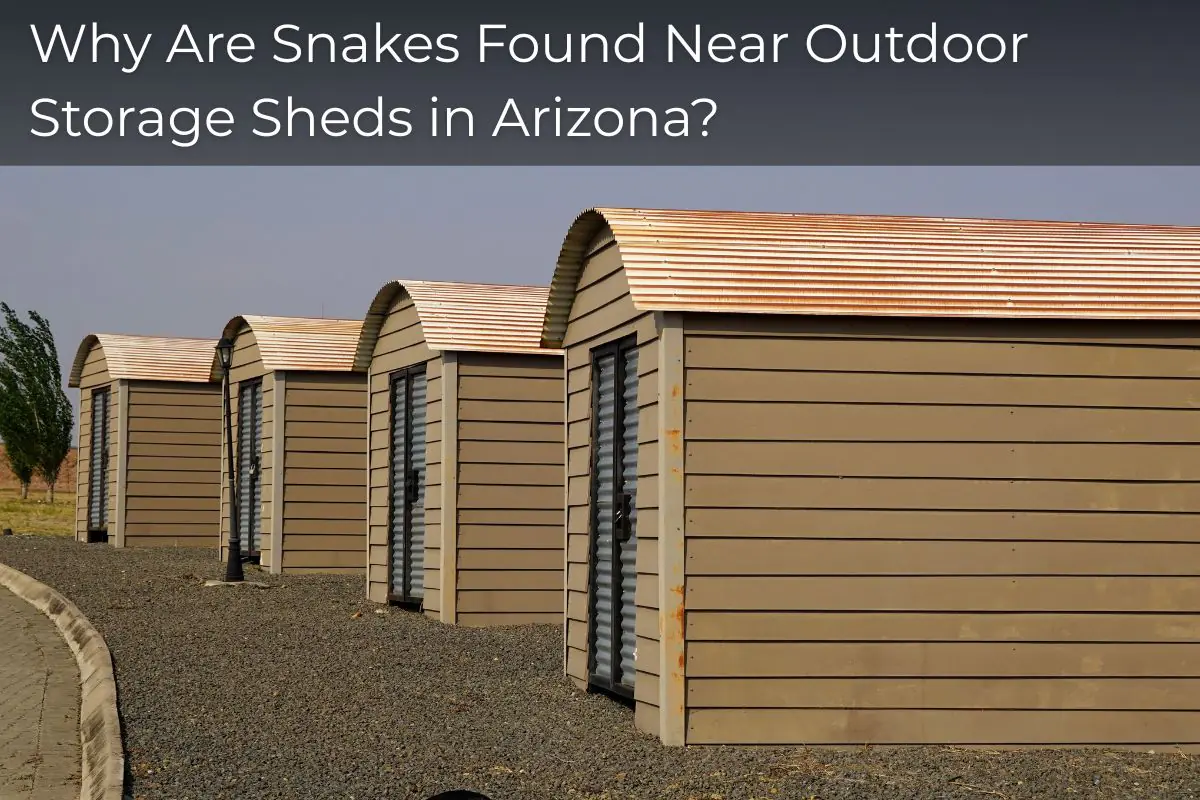
Why Are Snakes Found Near Outdoor Storage Sheds in Arizona? Sheds can provide shade and sheltered spaces, while nearby clutter, vegetation, and rodents may make the surrounding area useful to snakes looking for cover or prey.
Arizona’s hot weather can lead snakes to seek protected places during the day. A snake spotted near a shed may simply be passing through; its presence does not necessarily mean it lives underneath or inside the building.
You can reduce unwanted encounters by removing unnecessary clutter, controlling rodents, maintaining vegetation, and checking around the shed before moving stored items.
Why Snakes Like Outdoor Storage Sheds
Most snakes aren’t interested in buildings themselves. They’re attracted to the conditions that commonly exist around outdoor sheds.
Understanding these conditions makes it much easier to reduce future encounters.
Shade During Arizona’s Hot Weather
Summer temperatures across Arizona regularly climb above 100°F.
During the hottest part of the day, snakes often look for cooler places to rest until evening. The shaded area beneath or beside a storage shed provides relief from direct sunlight and helps snakes conserve energy.
Sheds placed on gravel or concrete pads may also create cooler pockets underneath where snakes can remain hidden.
Rodents Living Around Sheds
One of the biggest reasons snakes visit storage sheds is the presence of rodents.
Mice and pack rats frequently build nests around sheds because they’re protected from predators and weather. They may also find bird seed, pet food, gardening supplies, or stored materials that provide shelter.
Since rodents are an important food source for many Arizona snakes, areas with frequent rodent activity naturally become more attractive to predators.
Keeping the area clean and storing supplies in sealed containers can help reduce rodent populations.
Clutter Creates Excellent Hiding Places
Outdoor sheds often become storage areas for items that aren’t used every day.
Piles of lumber, old flower pots, unused bricks, tarps, hoses, and gardening equipment create dark spaces where snakes can hide without being disturbed.
The more clutter surrounding a shed, the more difficult it becomes to notice wildlife before getting close.
Keeping the area organized improves visibility and reduces available shelter.
Firewood Stacked Beside the Shed
Many homeowners store firewood against the side of a shed because it’s convenient.
Unfortunately, stacked wood provides ideal hiding places for rodents, insects, and snakes.
Wood piles also remain cooler than exposed ground during much of the day, making them attractive resting places.
Whenever possible, store firewood on a raised rack several feet away from the shed.
Dense Landscaping
Shrubs, ornamental grasses, cactus gardens, and ground cover planted around sheds create attractive landscaping.
However, these plants also provide excellent cover for wildlife moving through residential yards.
Keeping vegetation trimmed away from the shed makes it easier to inspect the area before entering.
Water Sources Nearby
Even small amounts of water can increase wildlife activity.
Leaking irrigation systems, dripping outdoor faucets, pet water bowls, or bird baths may attract insects, rodents, birds, and lizards.
These animals can become prey for local snakes, increasing the likelihood of occasional visits.
Common Arizona Snakes Found Near Storage Sheds
Several Arizona snake species may be found around sheds, especially in neighborhoods located near natural desert habitat.
Most are non-venomous and help control rodent populations.
Gopher Snake
The gopher snake is one of the most common snakes homeowners encounter.
Because it feeds primarily on rodents, it’s often seen near sheds, garages, barns, and wood piles.
Its blotched pattern sometimes causes people to mistake it for a rattlesnake.
When threatened, a gopher snake may hiss loudly or vibrate its tail against dry leaves, but it is non-venomous.
Kingsnake
Kingsnakes are another beneficial species commonly found in Arizona.
They feed on rodents, lizards, and even other snakes, including venomous rattlesnakes.
Although seeing any snake can be unsettling, kingsnakes often help reduce unwanted wildlife around residential properties.
Coachwhip
Coachwhips are fast-moving snakes active during daylight hours.
They frequently hunt lizards, rodents, birds, and smaller snakes.
Because they travel long distances while searching for food, they may occasionally pass through residential neighborhoods before continuing on.
Glossy Snake
Glossy snakes are mostly active after sunset.
They feed on small mammals and lizards and often remain hidden during daylight hours.
Many homeowners never realize one has visited because of its secretive behavior.
Western Diamondback Rattlesnake
The Western Diamondback Rattlesnake can occasionally appear around storage sheds located near open desert, washes, or undeveloped land.
Rodent activity is often the main reason these snakes enter residential areas.
Signs Snakes May Be Using Your Shed Area
Directly seeing a snake isn’t the only indication that wildlife has been visiting your property.
Watch for these signs around your storage shed:
- Shed snake skin
- Snake tracks in dusty soil
- Rodent droppings
- Mouse nests
- Burrows beneath the shed
- Snake droppings
- Increased lizard activity
- Pets repeatedly investigating one area
One sign alone doesn’t necessarily mean a snake is living nearby.
However, multiple signs over several weeks may indicate your yard provides favorable conditions for wildlife.
Are Snakes Living Inside Your Shed?
In most cases, no.
Snakes are more likely to hide underneath a shed or around nearby objects than inside a frequently used storage building.
However, sheds that remain closed for months at a time can occasionally become temporary shelter.
Small gaps beneath doors, damaged walls, foundation openings, or vents may allow wildlife to enter.
Inspecting your shed regularly and sealing openings can reduce these opportunities.
How to Keep Snakes Away From Outdoor Storage Sheds
You don’t have to remove your storage shed or completely redesign your yard to reduce snake activity. A few simple maintenance habits can make the area much less attractive to snakes and the animals they hunt.
Keep the Area Around the Shed Clean
A cluttered shed area offers countless hiding places for snakes, rodents, and insects.
Remove unused flower pots, old buckets, broken tools, scrap lumber, cardboard boxes, and other materials that collect around the shed. Keeping the ground open makes it easier to spot wildlife before walking into the area.
Trim Grass and Shrubs
Overgrown grass and dense shrubs provide excellent cover for snakes moving through your yard.
Trim vegetation regularly and leave a small open space around the outside of the shed. This improves visibility and reduces shaded hiding places.
Control Rodent Activity
If rodents are living around your shed, snakes may eventually follow.
Store bird seed, grass seed, fertilizer, and pet food in sealed containers. Clean up spilled seed immediately and inspect the area for signs of mice or pack rats.
Reducing rodent activity is one of the most effective ways to discourage snakes from visiting your property.
Seal Small Openings
Inspect your storage shed for gaps around doors, vents, and the foundation.
Even small openings may allow rodents to enter, creating food sources that attract snakes.
Repair damaged doors, replace worn weather stripping, and seal unnecessary openings whenever possible.
Store Firewood Properly
Firewood should never be stacked directly against your storage shed.
Instead, use a raised firewood rack placed several feet away from the building. This reduces hiding places for rodents and snakes while improving airflow around the wood.
Check Before Entering the Shed
Before opening the shed, take a quick look around the doorway, nearby landscaping, and stored materials.
If you haven’t used the shed for several weeks, inspect the interior carefully before reaching behind boxes or equipment.
This simple habit can help prevent unexpected encounters.
What Should You Do If You Find a Snake Near Your Shed?
If you discover a snake while working around your shed, remain calm.
Most snakes want to avoid people and will leave if given enough space.
Back away slowly and keep children and pets away from the area.
Never try to catch, kill, or move the snake yourself. Most bites occur when people attempt to handle or corner a snake.
If you’re unable to identify the snake from a safe distance or believe it’s venomous, contact a licensed wildlife removal professional.
If someone is bitten by a venomous snake, seek emergency medical care immediately. The Centers for Disease Control and Prevention (CDC) recommends avoiding attempts to capture the snake and keeping the affected person as calm as possible while getting medical help.
Final Thoughts
Snakes found near outdoor storage sheds in Arizona are often responding to the shelter and food sources around the building. Clutter, rodent activity, dense vegetation, and gaps beneath a shed can create places for wildlife to hide.
To reduce encounters, keep the area organized, control rodents, maintain nearby landscaping, store firewood away from the shed, and inspect stored items before moving them. If you encounter a snake, give it space and never try to handle it yourself.
A snake near a shed doesn’t necessarily live there. Regular maintenance and safe habits can help you share your yard with Arizona’s wildlife while reducing unwanted encounters.

Ravi Rathore is a field snake researcher and Arizona wildlife enthusiast who studies snake behavior, identification, and desert ecosystems. He focuses on helping hikers, homeowners, and outdoor explorers understand the difference between venomous and non-venomous snakes in Arizona. Through detailed guides and safety resources, he shares practical knowledge to help people stay safe while respecting native wildlife.