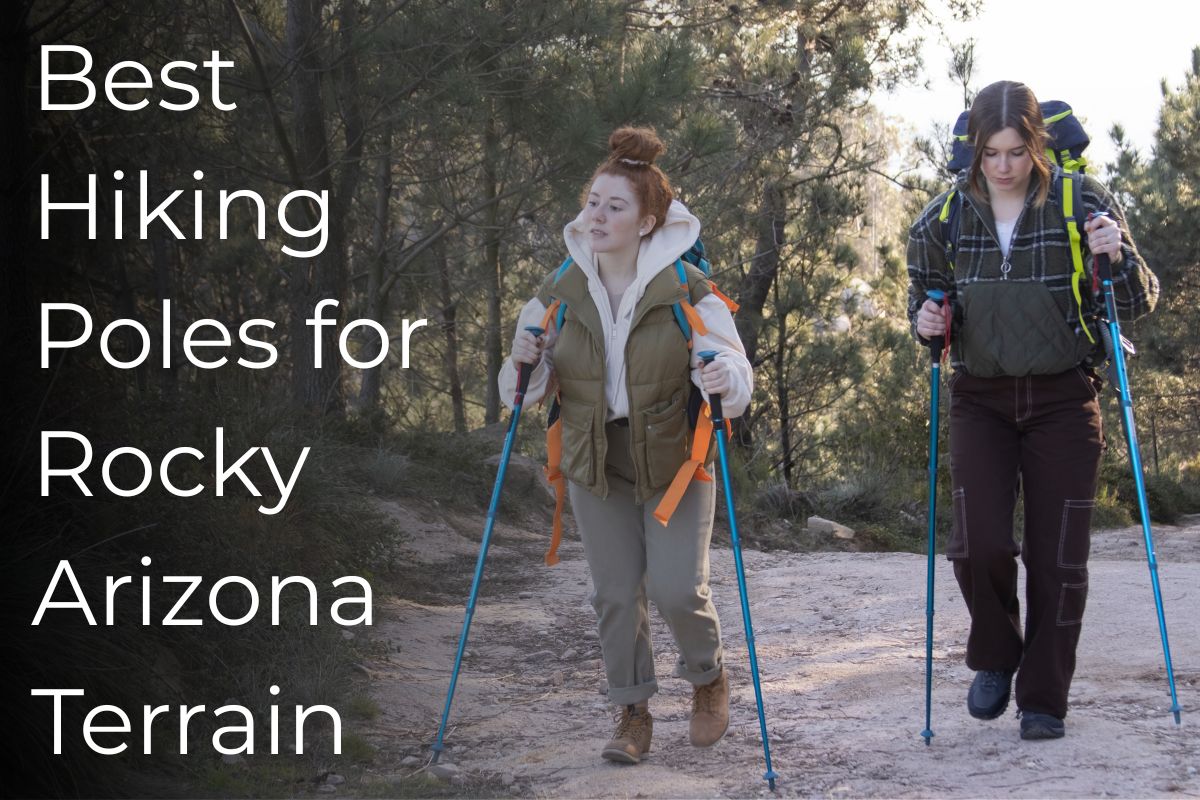
Finding the best hiking poles for rocky Arizona terrain can make uneven trails, loose gravel, steep switchbacks, and rocky descents easier to manage. A good pair of hiking poles can provide extra balance and support while you’re hiking with a daypack, especially on trails where the ground changes quickly.
The important part is choosing poles that match the kind of Arizona hiking you actually do. A lightweight folding pole may make sense for someone covering long distances, while an adjustable aluminum pole can be a better fit for hikers who regularly encounter rough, rocky terrain.
In this guide, we’ll look at several popular trekking poles and explain where each type makes sense for Arizona hiking. We’ll also cover the features that matter most when you’re dealing with loose rock, steep elevation changes, sandy washes, heat, and long desert miles.
Disclosure: This article may contain affiliate links. We may earn a commission at no extra cost to you.
If you’re preparing for Arizona trails where snake encounters are possible, hiking poles are only one part of your gear. You may also want to compare footwear designed for desert hiking in our guide to the Best Snake Boots for Desert Hiking.
Why Hiking Poles Can Be Useful on Arizona Trails
Arizona doesn’t have one single type of hiking terrain.
A trail near Phoenix can include loose desert rock and steep climbs. A route around Sedona may involve sandstone, uneven steps, and slick surfaces after rain. Grand Canyon hikes can involve thousands of feet of elevation change, while trails in other parts of the state may cross sandy washes or rough volcanic terrain.
Hiking poles give you two additional points of contact with the ground. That doesn’t make a trail automatically safe, but it can help you maintain balance when your footing changes.
They can also be useful when:
- Descending steep trails
- Crossing loose gravel
- Walking through uneven rock
- Carrying a backpack
- Crossing shallow washes
- Moving over long stretches of uneven terrain
- Managing fatigue late in a hike
Poles are particularly useful on descents because they allow you to use your arms for additional support while stepping down.
They aren’t a replacement for good footwear, careful foot placement, hydration, or paying attention to trail conditions.
What Makes Arizona Hiking Different?
The reason to choose hiking poles specifically for Arizona is that the terrain can be unusually varied.
You might start a hike on relatively smooth dirt and later encounter loose stones, exposed rock, sand, or a steep descent. The temperature can also become a major factor, particularly on exposed trails with little shade.
Common conditions include:
- Loose desert gravel
- Jagged rocks
- Sandstone
- Boulder-covered sections
- Sandy washes
- Dry creek beds
- Steep switchbacks
- Long downhill sections
- High temperatures
- Limited shade
This combination makes versatility more important than simply choosing the lightest pole available.
For example, someone hiking a short, relatively smooth trail may not need an expensive carbon-fiber folding pole. A hiker covering long distances with a lightweight pack may have completely different priorities.
How We Evaluated These Hiking Poles
Rather than presenting every expensive trekking pole as a good choice, this guide focuses on features that are relevant to Arizona hikers.
The main factors are:
Material: Aluminum and carbon fiber behave differently when exposed to impacts and repeated use.
Weight: Lighter poles can be more comfortable during long hikes, but minimum weight isn’t the only consideration.
Adjustment: Adjustable poles allow you to change length for climbs and descents.
Grip: Grip material and shape become increasingly important during long hikes and hot weather.
Folding or collapsed size: A compact pole is useful if you need to put it inside a backpack or luggage.
Locking system: The adjustment mechanism should hold the selected length securely.
Tip and basket options: Different tips can be useful on rock, dirt, pavement, or softer surfaces.
Value: A more expensive pole isn’t automatically a better choice for every Arizona hiker.
Product specifications can change between model years, so check the manufacturer’s current specifications before purchasing.
Best Hiking Poles for Rocky Arizona Terrain
Black Diamond Trail Cork
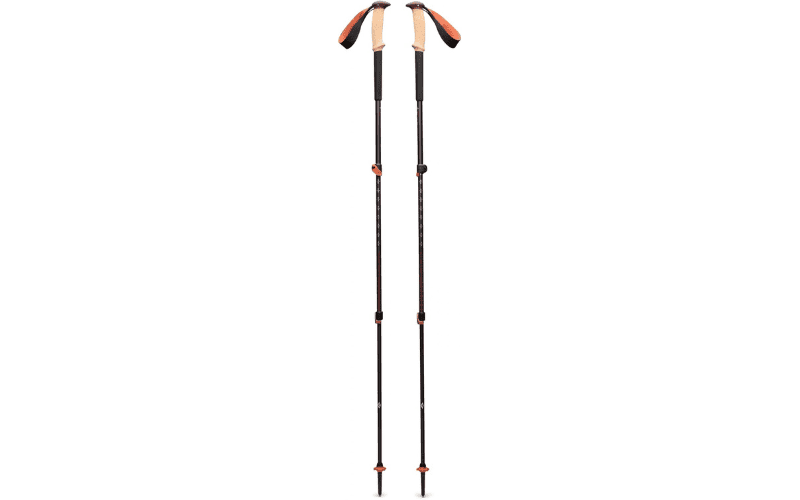
The Black Diamond Trail Cork is a conventional adjustable trekking pole designed around durability and versatility.
The current model uses aluminum shafts and a natural cork grip, with FlickLock adjustment and a usable length of 100 to 140 cm. Black Diamond lists the pair weight at 494 grams.
For Arizona hiking, the biggest advantage is its combination of adjustable length and aluminum construction.
If you’re moving between climbs, descents, and flatter sections, being able to change the pole length can be more useful than having an ultralight fixed-length design.
The cork grip is also worth considering for hikers who spend several hours on the trail. Grip comfort becomes increasingly noticeable during long hikes, especially when your hands are warm or sweaty.
Pros
- Adjustable length
- Aluminum construction
- Natural cork grip
- Suitable for varied terrain
- Includes trekking and snow baskets
- Good choice for general hiking
Cons
- Heavier than some carbon-fiber options
- Not as compact as folding poles
- May be more pole than an occasional short-distance hiker needs
Best suited to: Arizona hikers who want a conventional adjustable pole for a variety of trail conditions.
LEKI Makalu FX Carbon
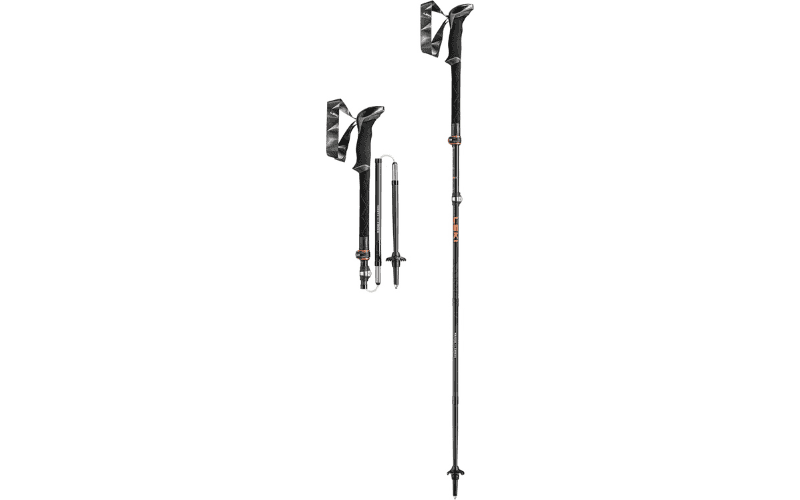
The LEKI Makalu FX Carbon takes a different approach.
It combines carbon construction with a folding design and adjustable length. The current model weighs 252 grams and adjusts from 110 to 130 cm. It also includes a grip extension that can be useful when changing hand position on climbs.
For Arizona hikers who spend long days on the trail and care about packability, the folding design is particularly attractive.
Its lower weight can also matter when you’re carrying other equipment such as water, food, navigation equipment, first-aid supplies, and extra layers.
The trade-off is price and the different characteristics of carbon construction. Hikers who regularly subject their poles to hard impacts should consider whether a lightweight carbon model matches their style of hiking.
Pros
- Very light
- Folding design
- Adjustable
- Compact when packed
- Grip extension for changing hand position
- Suitable for long-distance hiking
Cons
- Higher cost than many basic trekking poles
- Carbon construction may not appeal to hikers who prioritize impact tolerance
- Less compelling if you mainly take short recreational hikes
Best suited to: Frequent hikers who value low weight and compact storage.
Cascade Mountain Tech Carbon Fiber Quick Lock
Cascade Mountain Tech offers carbon-fiber trekking poles aimed at hikers who want lightweight construction without moving into the highest price range.
The company’s current carbon quick-lock model uses carbon-fiber shafts, EVA grips, quick-lock adjustment, and tungsten-carbide tips. The manufacturer lists the individual pole weight at 8 ounces without rubber tips and a length range of 26 to 54 inches.
That makes this type of pole worth considering if you’re looking for a lighter adjustable option while keeping the budget below some premium trekking poles.
The important thing is to check the exact version before purchasing because Cascade Mountain Tech sells multiple trekking-pole configurations, including different grip materials.
Pros
- Carbon-fiber construction
- Adjustable quick-lock system
- Relatively light
- Multiple tip accessories
- Replacement parts are available
- More accessible price category than many premium poles
Cons
- Model specifications vary
- Not as compact as some dedicated folding poles
- Exact weight depends on the configuration
Best suited to: Hikers who want carbon-fiber poles and adjustable length without automatically moving into premium-priced equipment.
Black Diamond Distance Z
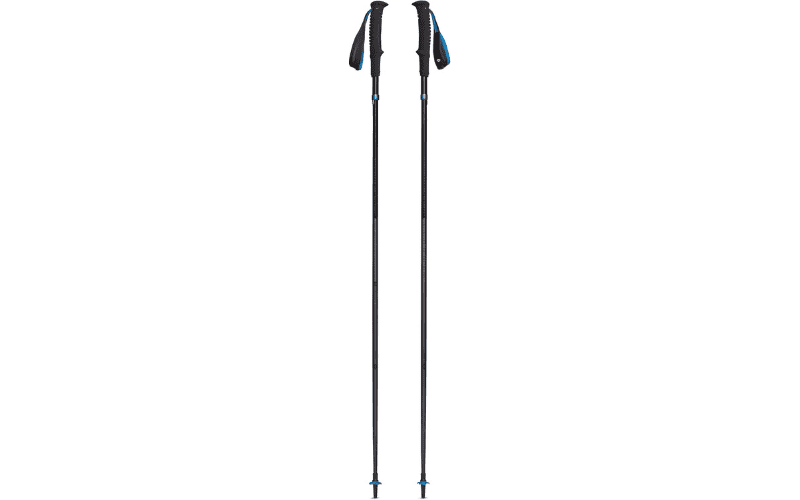
The Black Diamond Distance Z is aimed at hikers and runners who value a simple, lightweight folding design.
One important point is that the current Distance Z is a fixed-length aluminum Z-pole, rather than an adjustable carbon-fiber pole. Available lengths include 100, 110, 120, and 130 cm, with the weight varying by length.
That fixed-length design makes it particularly interesting for hikers who already know the pole length they prefer.
It is less flexible than an adjustable pole when the trail changes from a climb to a descent, but the compact folding design can be convenient when poles need to be stored quickly.
For fast hiking, long-distance routes, or situations where packability is important, this type of pole can make sense.
Pros
- Compact folding design
- Fixed-length simplicity
- Lightweight compared with many traditional adjustable poles
- Designed for hiking and running
- Easy to store in a pack
Cons
- No length adjustment
- You need to choose the appropriate size
- Less flexible for changing terrain
- Not necessarily the best choice for beginners who are still learning their preferred pole length
Best suited to: Experienced hikers and trail runners who already know what pole length they need.
TREKOLOGY Trek-Z 2.0
The TREKOLOGY Trek-Z 2.0 is another option for hikers who prioritize portability and a lower purchase price.
Its folding design makes it convenient for travel, particularly if you’re visiting Arizona for a hiking trip rather than living locally.
For occasional hikers, the main question isn’t whether it matches premium poles feature-for-feature. The more useful question is whether its construction, adjustment system, grip, and weight meet your needs without paying for features you won’t use.
Before purchasing, check the current product listing for the exact version and specifications because product configurations can change.
Pros
- Compact folding design
- Accessible price category
- Suitable for occasional hiking
- Convenient for travel
- Useful for beginners who want to try trekking poles
Cons
- Not designed around the same priorities as premium poles
- Heavier than some ultralight alternatives
- Exact specifications should be checked before purchase
Best suited to: Occasional hikers and beginners who want a compact pair without spending heavily.
Quick Comparison
| Hiking pole | Construction | Adjustment | Folding | Best suited to |
|---|---|---|---|---|
| Black Diamond Trail Cork | Aluminum | Yes | No | General Arizona hiking |
| LEKI Makalu FX Carbon | Carbon | Yes | Yes | Long-distance hiking |
| Cascade Mountain Tech Carbon Fiber | Carbon | Yes | No | Value-focused hikers |
| Black Diamond Distance Z | Aluminum | No | Yes | Fast hiking and trail running |
| TREKOLOGY Trek-Z 2.0 | Aluminum | Check current model | Yes | Beginners and occasional hiking |
Specifications and availability can change, so verify the exact model before ordering.
Aluminum vs. Carbon Fiber Hiking Poles
This is one of the first decisions to make.
Aluminum
Aluminum poles are often chosen by hikers who prioritize durability and versatility.
When an aluminum pole receives a hard impact, it can bend rather than immediately breaking. That doesn’t mean aluminum poles are indestructible, but the material can be appealing for hikers who frequently encounter rough terrain.
For Arizona’s rocky trails, aluminum can be a sensible choice if you tend to use your poles heavily.
The trade-off is weight.
Carbon Fiber
Carbon fiber poles are attractive when reducing weight is important.
A lighter pole can be noticeable during a long hike, especially when you’re repeatedly lifting and planting it thousands of times.
Carbon poles also tend to be popular with hikers who prioritize compact, lightweight equipment.
The trade-off is that carbon construction requires more care around severe impacts. A hiker who regularly bangs poles against rocks may prefer to prioritize durability over minimum weight.
There isn’t one material that is right for every Arizona trail.
Adjustable vs. Fixed-Length Poles
For many Arizona hikers, adjustable poles are the more flexible option.
On an uphill section, you may prefer a slightly shorter pole. During a descent, a longer setting can make it easier to plant the tip ahead of you.
Fixed-length poles eliminate that adjustment but can be lighter and simpler.
They’re particularly useful for hikers who already know their preferred pole length.
If you’re buying your first pair, adjustable poles usually give you more room to experiment.
What Grip Material Should You Choose?
Your grip becomes increasingly important as hiking time increases.
Cork
Cork is popular because it feels comfortable in the hand and manages moisture well.
It can be a good option for longer hikes where you’ll be holding the poles continuously.
Foam
Foam grips are generally lightweight and can feel soft in the hand.
They’re worth considering if minimizing weight is a priority.
Rubber
Rubber grips are durable and can work well for certain activities, but some hikers find them less comfortable during long hikes in hot weather.
For Arizona, comfort matters because you may spend several hours holding the poles in warm conditions.
Why Pole Length Matters
Correct length is more important than many first-time buyers realize.
A common starting point is to adjust the poles so your elbows are roughly at a right angle when you’re standing naturally with the tips on level ground.
That isn’t a rule that every hiker must follow exactly. Body proportions, terrain, and personal preference can change the ideal setting.
On steep climbs, some hikers shorten the poles.
On descents, they may lengthen them slightly.
This is one reason adjustable poles can be useful on Arizona trails with significant elevation changes.
What About the Pole Tips?
The tip is the part that actually contacts the trail.
Many trekking poles use carbide or similar hard tips for traction on rough ground.
Some models also include rubber covers or alternative tips for different surfaces.
On a rocky trail, the standard traction tip may be appropriate. On pavement or sensitive surfaces, a rubber tip may be more suitable.
Don’t assume every included accessory is necessary for every hike. Carry the pieces that match the conditions you’re actually expecting.
Do Hiking Poles Help on Grand Canyon Trails?
They can be particularly useful on long Grand Canyon hikes because the elevation change can be substantial.
The descent may feel easy at the beginning of a hike and considerably different several hours later. The return climb can then put additional demands on tired legs.
Trekking poles provide additional points of contact and can help with balance during the changing terrain.
However, poles don’t make a Grand Canyon hike easy.
Distance, elevation gain, heat, hydration, trail conditions, fitness, and turnaround decisions remain important considerations.
If you’re planning a demanding Grand Canyon hike, don’t use trekking poles as a reason to underestimate the trail.
Are Hiking Poles Useful Around Phoenix and the Sonoran Desert?
They can be.
Trails around the Phoenix area can include steep climbs, loose rock, exposed desert terrain, and uneven surfaces.
For these conditions, an adjustable pole can be useful because you can change the length as the trail changes.
A durable aluminum pole may appeal to hikers who regularly encounter rocky surfaces, while lightweight carbon poles can be attractive if you spend long hours covering distance.
Your actual trail matters more than the city name, so check the route description and current conditions before deciding what equipment to carry.
What About Sedona?
Sedona’s trails can combine rock, uneven steps, elevation changes, and exposed sections.
Trekking poles may be particularly useful on routes where you’re repeatedly stepping up or down over uneven terrain.
Grip comfort and adjustability can matter more than shaving a few grams from your equipment.
If your Sedona itinerary includes several hikes, a versatile adjustable pole may be more practical than a fixed-length model.
Hiking Poles and Snake Country
Hiking poles should not be considered snake-defense equipment.
If you encounter a snake on an Arizona trail, the safest approach is generally to give it space and allow it to move away rather than attempting to touch, move, or threaten it with a pole.
A trekking pole can still be useful for normal hiking because it can improve balance and help you test footing on some types of uneven terrain.
It should never be used to poke vegetation or rocks simply because you suspect a snake might be nearby.
For more information about what to do during an encounter, see our guide to What to Do If You See a Snake While Hiking in Arizona.
Who Actually Needs Hiking Poles?
Beginners
Beginners may appreciate the additional stability, especially when learning how to move over uneven terrain.
The important thing is to learn proper pole technique rather than relying on the poles to compensate for poor footing.
Backpackers
A backpack adds weight and changes how your body moves.
Poles can provide additional support and may make steep climbs and descents feel more controlled.
Long-Distance Hikers
Weight becomes more noticeable over many miles.
This is where lightweight carbon or folding poles may become more attractive.
Hikers Who Struggle With Steep Descents
If downhill sections are where you feel least comfortable, poles may be particularly useful because they provide additional support as you descend.
Occasional Hikers
You don’t necessarily need an expensive pair.
A reasonably priced adjustable pole may provide everything you need for a few hikes each year.
How to Use Hiking Poles on Rocky Terrain
Buying good poles is only part of the equation.
Use the following habits on Arizona trails:
Keep your eyes on the trail. Poles should supplement careful foot placement, not replace it.
Don’t plant too far ahead. A pole should give you support without forcing you to overreach.
Use shorter settings uphill. A slightly shorter pole can feel more natural on steep climbs.
Lengthen them for descents. This can make it easier to plant the tip ahead of your body.
Relax your grip. Holding the handles too tightly can make your hands and forearms tired.
Check the locks. Before starting a hike, make sure adjustable sections are securely locked.
Clean the poles after dusty hikes. Fine desert dust and sand can accumulate around moving components.
Don’t use poles as a substitute for caution. Wet rock, loose gravel, and steep edges can still be dangerous.
How to Care for Hiking Poles in Arizona
Desert conditions can be hard on outdoor equipment.
After a dusty hike, wipe down the shafts and inspect the adjustment areas.
If the poles have moving or locking components, follow the manufacturer’s cleaning and maintenance instructions rather than applying random lubricants.
Check the tips periodically for wear.
Also inspect the sections for cracks, bends, or other damage before a demanding hike.
This is especially important if a pole has taken a hard impact.
Frequently Asked Questions
Are hiking poles worth it in Arizona?
They can be useful on Arizona’s uneven and rocky trails, particularly on steep climbs, descents, and routes where balance is challenging. They are an optional hiking aid rather than essential equipment for every trail.
Are aluminum or carbon-fiber poles better for Arizona?
It depends on how you hike. Aluminum can make sense if durability and impact tolerance are priorities. Carbon fiber can be attractive if low weight is more important. The terrain and your hiking style should determine the choice.
Do I need hiking poles for the Grand Canyon?
You don’t need them for every Grand Canyon hike, but they can provide additional support and balance during long climbs and descents. The difficulty of the route, distance, elevation change, weather, and your experience should all factor into your equipment choices.
Can hiking poles prevent falls?
No. They can provide additional points of contact and may improve balance, but they cannot prevent every slip or fall. Loose rock, wet surfaces, steep terrain, and poor footing can still create hazards.
Are expensive hiking poles worth the money?
They can be worthwhile for hikers who use poles frequently and value features such as lower weight, better grips, compact folding systems, or more sophisticated adjustment mechanisms. Occasional hikers may find a less expensive model perfectly adequate.
Should I use one hiking pole or two?
Two poles provide more balanced support and allow you to distribute your effort between both sides of your body. Some hikers prefer one pole on easier terrain, but two can be useful on steep or uneven trails.
What length hiking poles should I buy?
Your ideal length depends on your height, body proportions, and hiking style. Adjustable poles give you more flexibility. A common starting point is an elbow angle close to 90 degrees while standing naturally on level ground, followed by small adjustments for personal comfort and terrain.
Are hiking poles useful for desert hiking?
Yes, they can be useful on uneven desert trails, loose gravel, rocky climbs, and descents. Their usefulness depends on the trail rather than the fact that it is technically a desert environment.
Can I use hiking poles around snakes?
Hiking poles should not be used to approach, poke, move, or threaten a snake. If you encounter a snake, give it plenty of space and allow it to move away. The pole is hiking equipment, not snake-handling equipment.
Final Thoughts
The best hiking poles for rocky Arizona terrain depend less on the brand name and more on how and where you hike.
If you want a traditional adjustable pole for varied trails, the Black Diamond Trail Cork offers aluminum construction, cork grips, and a broad adjustment range.
If keeping weight and packed size low is important, the LEKI Makalu FX Carbon is designed around a lightweight folding format.
If you’re looking for a carbon-fiber adjustable option without automatically moving into the highest-priced category, Cascade Mountain Tech has models worth comparing.
For hikers who already know their preferred pole length and want a compact folding design, the Black Diamond Distance Z is another option to consider.
And if you’re an occasional hiker, there is little reason to spend heavily on features you won’t use.
Before buying, consider the trails you actually hike, how much gear you carry, how often you use trekking poles, and whether you value durability, low weight, adjustability, or compact storage most.
A good pair of hiking poles won’t remove the challenges of Arizona’s trails. What they can do is give you another useful tool for managing uneven ground, steep sections, and long days outdoors.

Ravi Rathore is a field snake researcher and Arizona wildlife enthusiast who studies snake behavior, identification, and desert ecosystems. He focuses on helping hikers, homeowners, and outdoor explorers understand the difference between venomous and non-venomous snakes in Arizona. Through detailed guides and safety resources, he shares practical knowledge to help people stay safe while respecting native wildlife.