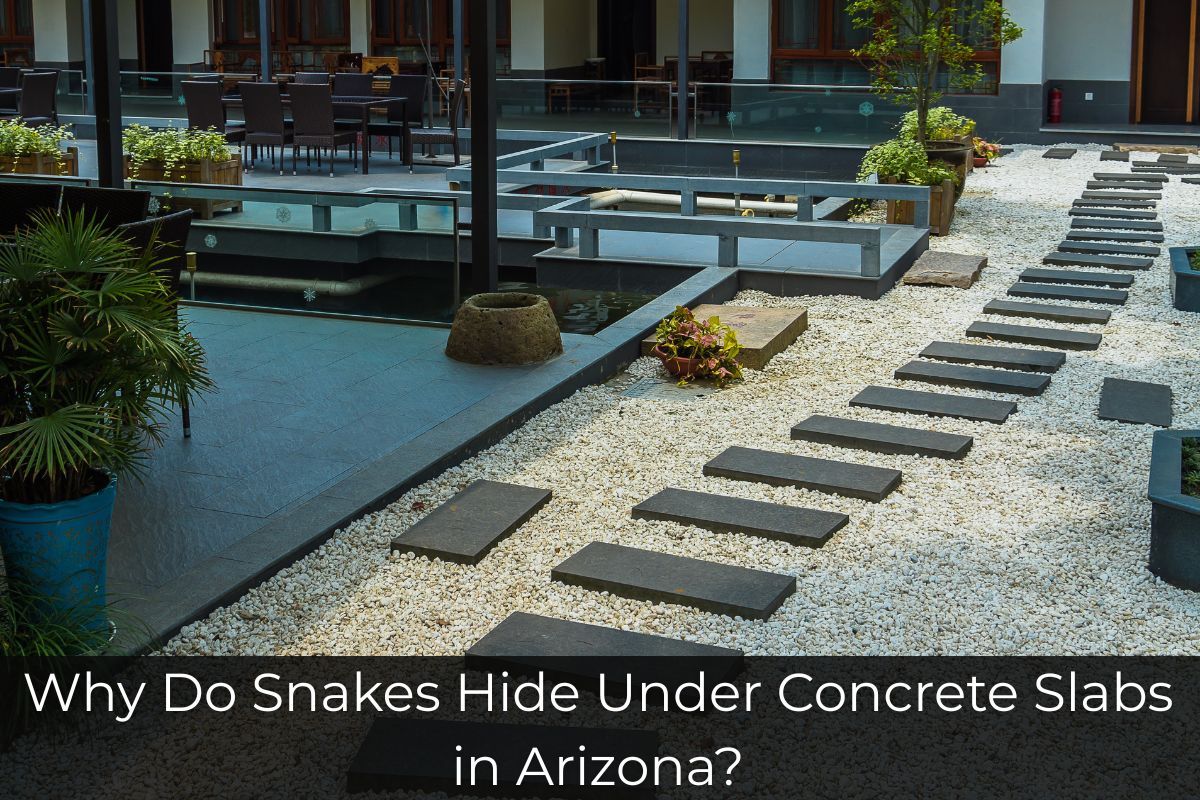
Why Do Snakes Hide Under Concrete Slabs in Arizona? The main reasons are shelter, shade, and access to prey. Gaps beneath patios, sidewalks, and driveways can provide a protected place to rest, especially when temperatures are high.
Snakes don’t dig tunnels beneath concrete. They usually use existing openings caused by soil settlement, erosion, or animal burrows. Rodents and lizards around the property may also attract snakes looking for food.
You can reduce unwanted encounters by controlling rodents, maintaining nearby landscaping, and repairing significant gaps without reaching into hidden spaces.
Why Do Snakes Hide Under Concrete Slabs in Arizona’s Desert Climate?
Concrete may seem like an unlikely hiding place, but the space beneath it often offers several advantages for wildlife.
A Cooler Place During Hot Weather
Arizona summers bring extreme daytime temperatures, especially in low-desert cities.
Although concrete becomes very hot in direct sunlight, the ground beneath a slab usually stays much cooler. That shaded space helps snakes avoid overheating during the hottest part of the day.
Many snake species become more active after sunset, so they often spend the afternoon resting in protected locations before moving out to hunt.
Protection From Predators
Snakes spend much of their lives avoiding animals that hunt them.
Roadrunners, hawks, owls, coyotes, bobcats, and other predators all feed on snakes. A narrow space beneath a concrete slab offers protection that is difficult for larger animals to reach.
For a snake, even a small gap can provide a safe place to rest.
Stable Shelter
Unlike piles of leaves or stacked wood, concrete slabs stay in place year-round.
The protected area underneath experiences fewer temperature changes and is shielded from wind, heavy rain, and direct sunlight.
That stability makes it an attractive temporary shelter.
Where Around the Home Are Snakes Most Likely to Hide?
Concrete slabs are found in many areas around residential properties.
Some locations naturally provide better shelter than others.
Backyard Patios
Patios often sit next to landscaping, irrigation systems, and outdoor furniture.
These features provide shade and cover while creating a natural travel route for wildlife.
Sidewalks
Long sidewalks running beside shrubs or decorative rock landscaping may develop small gaps over time.
Snakes moving through the yard occasionally use these protected edges while traveling.
Driveways
Driveways usually experience more human activity than other concrete areas.
Although snakes are less likely to remain beneath busy driveways for long periods, gaps near the edges can still provide temporary shelter.
Concrete Around Pools
Pool decks often stay cooler underneath because of irrigation, landscaping, and nearby shade.
If rodents or lizards are active nearby, snakes may occasionally pass through these areas.
Can Snakes Get Through Garage Door Gaps in Arizona? Garage door gaps are another area homeowners often overlook. This guide explains how to inspect and reduce possible access points.
Signs a Snake May Be Using the Area
Most snakes remain hidden and avoid people whenever possible.
Still, there are a few signs that may suggest wildlife is using the spaces around a concrete slab.
Frequent Snake Sightings
Seeing the same snake near your patio or sidewalk several times within a short period could indicate it has found shelter nearby.
This doesn’t necessarily mean it’s living under the slab permanently, but the area may be part of its regular travel route.
Rodent Activity
Rodents are one of the strongest indicators that snakes may visit a property.
If you notice droppings, burrows, or chewed materials near your patio or foundation, it’s worth addressing the rodent problem first.
Gaps Along the Edge of the Slab
Walk around your patio or driveway occasionally and inspect the edges.
Visible openings beneath the concrete may provide access for small wildlife.
Not every gap contains a snake, but sealing significant openings after correcting drainage or erosion problems can help discourage animals.
Shed Snake Skin
Finding a shed snake skin near the edge of a slab doesn’t necessarily mean a snake still lives there.
However, it does indicate that one was present in the area recently.
How to Reduce the Chances of Snakes Hiding Under Concrete Slabs
You may not be able to remove every gap beneath a concrete slab, but you can make your property much less attractive to snakes.
Most prevention focuses on reducing food, shelter, and easy access.
Seal Large Gaps Around the Slab
Inspect the edges of patios, sidewalks, and driveways a few times each year.
If you notice large voids caused by erosion or settling, repair them using the appropriate materials or have them professionally evaluated. Closing these openings removes potential shelter for wildlife.
Keep Landscaping Well Maintained
Overgrown shrubs, tall grass, and dense ground cover provide safe travel routes for snakes.
Trim vegetation around patios and walkways so the area stays open and easy to inspect. Good visibility also helps you notice wildlife before getting too close.
Control Rodents Around Your Property
Rodents are one of the main reasons snakes visit residential yards.
Store pet food in sealed containers, clean up fallen bird seed, and address rodent problems as soon as you notice signs of activity. When food becomes scarce, snakes are less likely to spend time nearby.
Remove Unnecessary Clutter
Avoid storing unused flower pots, lumber, bricks, or piles of debris next to patios and foundations.
These items create cool hiding places that complement the shelter beneath concrete slabs.
Inspect Before Working Outdoors
If you’re moving patio furniture, lifting planters, or working near the edge of a slab, take a quick look first.
A few seconds of caution can help prevent an unexpected encounter.
Should You Be Concerned About Snakes Under a Concrete Slab?
In most situations, no.
A snake hiding beneath a slab is usually looking for temporary shelter rather than trying to enter your home.
Many snakes move frequently while searching for food, water, or suitable temperatures. They may use the same sheltered location for a short period before moving elsewhere.
If you begin seeing snakes repeatedly around the same area, it’s worth inspecting your property for rodent activity, landscaping issues, or gaps beneath the slab that may be encouraging wildlife.
What Should You Do If You See a Snake?
Stay calm and keep your distance.
Most Arizona snakes will leave the area if they’re given space.
Do not attempt to capture, corner, or kill the snake. Most bites occur when people try to handle one.
If the snake is near a doorway, children’s play area, or another location where people may be at risk, contact a qualified wildlife removal professional.
Final Thoughts
If you’ve been wondering why do snakes hide under concrete slabs in Arizona, the answer usually comes down to shelter and survival. The shaded space beneath patios, sidewalks, and driveways offers protection from the desert heat, predators, and changing weather conditions. If rodents or other prey are nearby, the area becomes even more attractive.
Fortunately, homeowners can reduce the chances of snake activity by maintaining their landscaping, repairing large gaps beneath concrete, controlling rodents, and keeping outdoor areas free of clutter. Most snakes found around concrete slabs are simply moving through their natural habitat and will avoid people whenever possible.

Ravi Rathore is a field snake researcher and Arizona wildlife enthusiast who studies snake behavior, identification, and desert ecosystems. He focuses on helping hikers, homeowners, and outdoor explorers understand the difference between venomous and non-venomous snakes in Arizona. Through detailed guides and safety resources, he shares practical knowledge to help people stay safe while respecting native wildlife.