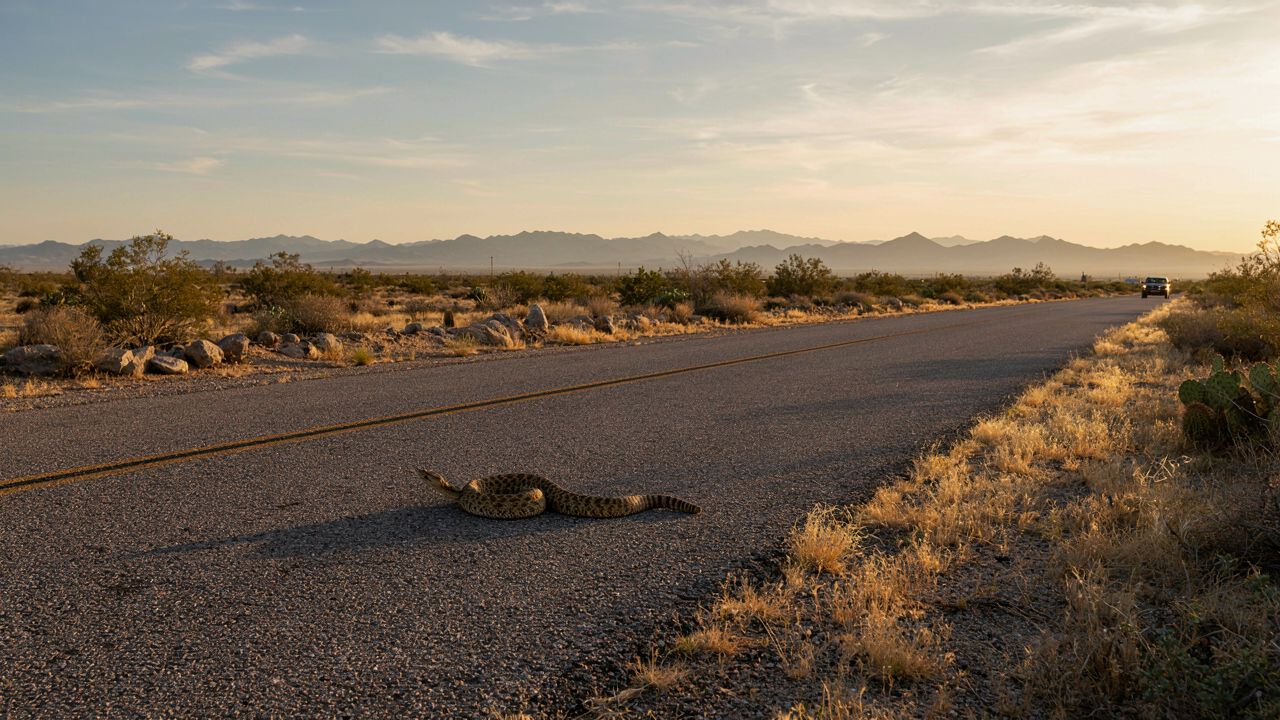
Snakes crossing roads in Arizona is not unusual, particularly when temperatures are warm and roads pass through natural habitat. Snakes may cross to reach shelter, find food, search for mates, or move between areas they use.
Paved roads can also provide warmth, but they expose snakes to passing vehicles. For drivers, the most important thing is to stay alert, avoid sudden swerving, and never approach or handle a snake.
Understanding why snakes cross roads in Arizona can help you respond safely when you encounter one.
Why Do Snakes Cross Roads in Arizona?
The simplest answer is that roads often run through snake habitat.
A snake does not understand a paved road in the same way a person does. It is simply moving through its environment. If a road happens to be between the snake and a shelter area, feeding location, water source, mate, or another suitable habitat, the snake may cross it.
Arizona’s roads pass through deserts, grasslands, rocky hillsides, forests, washes, agricultural areas, and rapidly growing residential communities. Wildlife movement can be interrupted by these roads, but animals continue to move across the landscape.
Arizona Game and Fish explains that roads, urban development, railroads, and other man-made barriers can interfere with natural wildlife movement. Maintaining connected habitat allows animals to move between areas for food, water, breeding, seasonal movement, and other needs.
So when you see a snake crossing a road, it may simply be traveling between two areas that are part of its normal range.
When Are Snakes More Likely to Cross Arizona Roads?
Snake activity varies by species, temperature, habitat, and season. In Arizona’s warmer desert regions, rattlesnakes are generally more active during the warmer months, although extreme summer heat can shift some activity toward evening and nighttime.
Spring can bring increased movement as snakes become active after cooler weather. During the summer monsoon, changing conditions can also affect wildlife movement, particularly near washes and other natural habitat.
These patterns do not guarantee that you will see a snake on the road at a particular time. Stay alert whenever you drive through areas where roads pass through desert, grassland, rocky hills, or other wildlife habitat.
Why Do Snakes Sometimes Stop in the Middle of the Road?
A snake in the middle of the road may look as though it is deliberately blocking traffic, but there is usually a simple explanation.
The pavement may be warmer than the surrounding ground.
The snake may also be pausing before continuing across the road.
Some snakes may freeze when they feel threatened rather than immediately moving away.
This can create a dangerous situation because a driver may see the snake but assume it will move before the vehicle reaches it.
Do not rely on that assumption.
Your safety comes first.
Arizona is home to several rattlesnake species, so drivers should take snake encounters seriously without assuming that every snake they see near a road is dangerous. For species information and wildlife resources, see the Arizona Game and Fish Department.
Why Drivers Should Never Swerve to Avoid a Snake
A road creates several risks for a snake.
The most obvious danger is vehicle traffic.
A snake moving slowly across pavement may have difficulty escaping the path of a vehicle. Even if the driver sees it, there may not be enough time to avoid it safely.
Roads can also divide otherwise connected habitats.
Arizona Game and Fish describes roads and other human infrastructure as barriers that can interfere with wildlife movement. Wildlife crossings and other connectivity projects are designed in part to reduce these conflicts.
For snakes and other reptiles, this matters because a road may separate areas that were previously connected.
A snake that repeatedly needs to cross a busy road faces repeated exposure to traffic.
Seeing a snake in the road can trigger an instinctive reaction.
A driver may want to quickly move into another lane or onto the shoulder to avoid it.
That can be more dangerous than the snake itself.
Sudden steering can cause a collision with another vehicle, a roadside object, a cyclist, or a pedestrian. Pulling onto an unsafe shoulder can also create another hazard.
The correct response depends on the road and traffic conditions, but the general rule is simple:
Never put yourself or other road users in danger to avoid a snake.
If you have enough distance and it is safe to do so, gradually reduce your speed and pass safely.
If there is heavy traffic or no safe way to avoid the snake, keep control of your vehicle and do not make an emergency maneuver.
What Should You Do If You See a Snake Crossing the Road?
If you see a snake while driving, stay calm and check the surrounding traffic. Slow down gradually if it is safe, and maintain control of your vehicle. Never swerve suddenly, stop in an unsafe place, or get out to handle the snake.
If you are walking or hiking and encounter a snake on a road or trail, stop at a safe distance and give it room to move away. Do not block its path, touch it, or try to make it move. If it is a rattlesnake, keep an especially wide distance and wait until you can pass safely.
If an injured snake creates a traffic hazard, contact the appropriate local wildlife authority when it is safe to do so.
If you want to learn how Arizona’s snake species differ, use our Arizona snake identification guide. Never approach a snake or get closer to it just to identify its species.
Why Are Snakes Found on Rural Arizona Roads?
Rural roads often pass directly through natural habitat.
You may encounter snakes on roads near:
- Desert washes
- Rocky hills
- Grasslands
- Agricultural land
- Mountain foothills
- Open desert
- Forest edges
- Wildlife corridors
- National forests
- Ranch land
- Residential areas bordering undeveloped desert
These roads may have relatively little traffic compared with major highways, but wildlife can still be present.
A quiet road may actually make wildlife movement easier because fewer vehicles pass through it.
This is one reason drivers should be particularly attentive on rural roads after dark and during periods of increased animal activity.
Why Are Snakes Sometimes Seen Near Neighborhood Roads?
Arizona’s cities and suburbs continue to expand into areas that were once undeveloped.
When homes, streets, walls, and other infrastructure are built, wildlife does not necessarily disappear from the surrounding landscape.
Instead, animals may continue using remaining patches of habitat.
Arizona Game and Fish notes that expanding communities can create conflicts between people and wildlife and that roads and development can affect natural wildlife movement.
A neighborhood road may therefore cross a natural movement route.
This is especially noticeable in communities near desert foothills, washes, open land, mountain corridors, or large undeveloped parcels.
Seeing a snake near a neighborhood does not automatically mean there is a snake infestation.
It may simply mean the property is located close to suitable habitat.
Are Certain Arizona Snakes More Likely to Be Seen on Roads?
The snakes you encounter on Arizona roads depend on the region and surrounding habitat. Desert areas may have species such as western diamondbacks, sidewinders, gophersnakes, and coachwhips, while other species occur in different habitats and elevations.
Never assume you can identify a snake from a quick glimpse. If you want to photograph one, do so only from a safe distance without approaching it. Never move closer to a snake to get a better picture.
When Should Arizona Drivers Be Most Careful?
There is no single hour when every snake will be on the road.
Instead, pay attention to conditions.
Warm weather can increase snake activity. Spring can bring increased daytime movement, while hotter summer temperatures can shift some rattlesnake activity toward nighttime.
Drivers should also remain alert during periods of changing weather and after rainfall, particularly in areas with natural habitat.
At night, visibility is reduced, making it harder to notice a snake on dark pavement.
Use your headlights properly, reduce speed when road conditions call for it, and pay attention to the road ahead.
How Can Drivers Reduce the Risk of Hitting Snakes?
You cannot avoid every wildlife encounter, but a few habits can reduce the risk.
Drive at a reasonable speed for the road and conditions.
Pay extra attention on rural roads, mountain roads, and roads near undeveloped desert.
Be especially careful around areas where wildlife crossings or signs indicate animal movement.
Avoid distracted driving.
Do not use your phone while driving.
At night, keep your attention on the road rather than scanning the roadside excessively.
If you see one animal, slow down and look carefully because other wildlife may be nearby.
Most importantly, do not make sudden steering movements.
Arizona’s wildlife connectivity programs recognize that roads can create serious problems for wildlife and motorists. Wildlife crossings are being developed in parts of the state to improve animal movement and reduce vehicle collisions.
Why Arizona’s Wildlife Corridors Matter
Road crossings are part of a larger wildlife issue.
Arizona’s natural areas are becoming increasingly connected to roads, neighborhoods, railways, and other development.
Wildlife corridors provide routes that allow animals to move between habitat areas.
Arizona Game and Fish has worked with transportation agencies on wildlife crossing projects designed to improve connectivity and reduce vehicle collisions.
While large wildlife crossings are often discussed in connection with animals such as elk, the broader idea is important for many species.
A connected landscape gives wildlife more opportunities to move naturally rather than being trapped by human infrastructure.
For snakes and other reptiles, road crossings remain a difficult challenge because their movement is often low to the ground and can be difficult for drivers to see.
What Drivers Should Remember About Snakes on Arizona Roads
Seeing a snake on an Arizona road can be surprising, but there is usually no mystery behind it.
The snake is likely moving through its habitat for one of the same basic reasons animals move anywhere: food, shelter, water, reproduction, temperature, or seasonal activity.
The road simply happens to be in its path.
The safest response is to stay calm, slow down when it is safe, maintain control of your vehicle, and avoid sudden swerving.
If you encounter a rattlesnake, do not approach it or attempt to move it.
For pedestrians and hikers, the same basic rule applies: give the snake plenty of space and let it move away on its own.
Arizona’s roads cut through a remarkable variety of wildlife habitat. Understanding that wildlife still moves through these areas can make drivers more prepared for unexpected encounters.
Snake activity also changes throughout the day as temperatures rise and fall. Learn what time of day rattlesnakes are most active in Arizona to better understand when they may be moving around their habitat.
Final Thoughts
Snakes crossing roads in Arizona is a normal part of wildlife movement. Roads often pass through habitat that snakes use for food, shelter, reproduction, and seasonal activity.
If you see a snake while driving, stay calm, slow down only when it is safe, and maintain control of your vehicle. Never swerve suddenly or get out to handle the animal. If you are walking, give the snake plenty of space and allow it to move away.
A little awareness can help protect both road users and Arizona’s wildlife.

Ravi Rathore is a field snake researcher and Arizona wildlife enthusiast who studies snake behavior, identification, and desert ecosystems. He focuses on helping hikers, homeowners, and outdoor explorers understand the difference between venomous and non-venomous snakes in Arizona. Through detailed guides and safety resources, he shares practical knowledge to help people stay safe while respecting native wildlife.