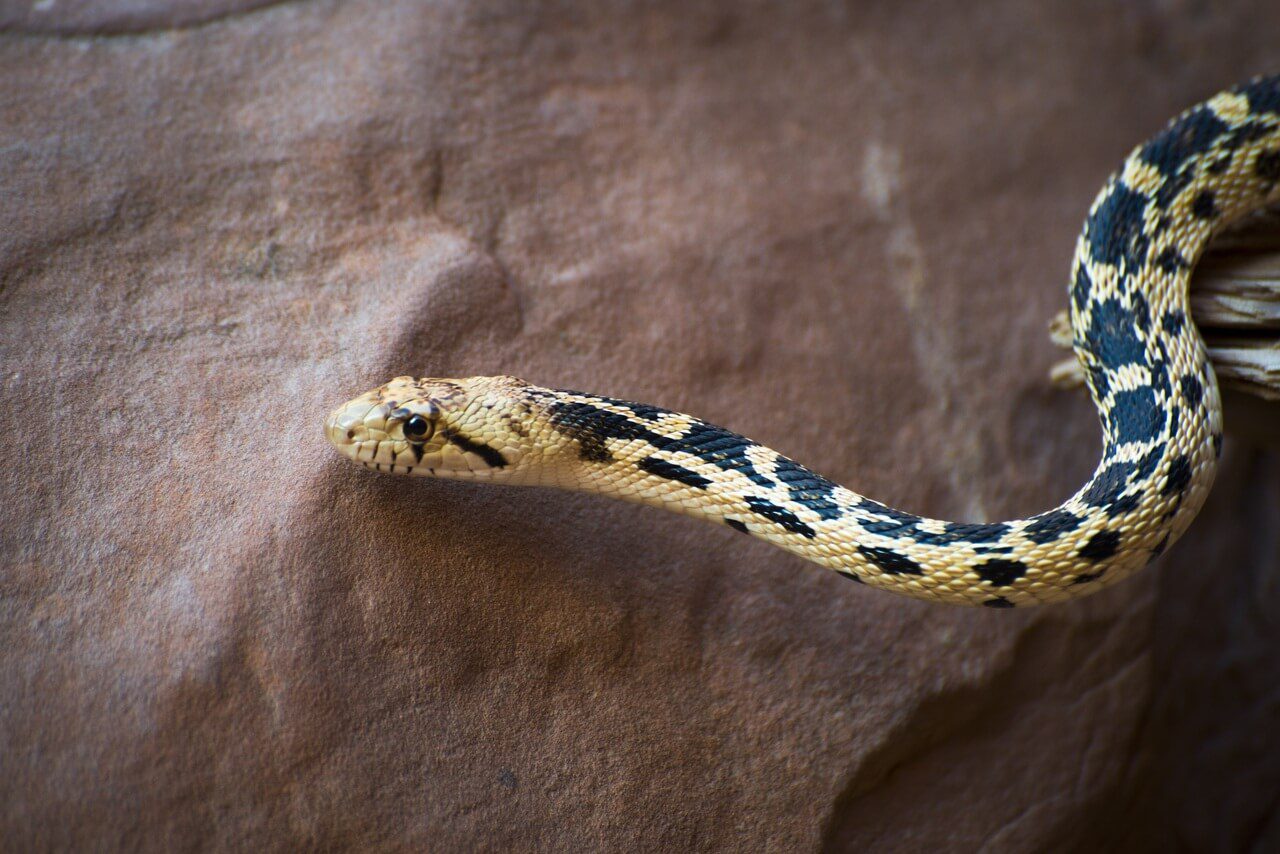
Arizona is known for rattlesnakes, but most snakes in the state are actually non-venomous and harmless to people. From suburban neighborhoods in Phoenix to hiking trails near Tucson, many of the snakes residents encounter every year pose little to no danger. Learning how to identify non-venomous snakes in Arizona can reduce fear, prevent unnecessary killing of wildlife, and help you respond calmly if you see one.
Non-venomous snakes do not inject medically significant venom into humans. They either constrict their prey or swallow it whole. While they may bite if handled or threatened, their bites are not considered dangerous to healthy adults. In most situations, these snakes prefer to escape rather than confront people.
Why Non-Venomous Snakes Matter in Arizona
Harmless snakes play an important role in Arizona’s desert and suburban ecosystems. They help control rodent populations, which reduces property damage and limits the spread of rodent-borne diseases. Around homes, farms, and parks, this natural pest control is extremely valuable.
Because Arizona has warm weather for much of the year, snakes remain active longer than in many other states. As cities expand into desert areas, it is normal for residents to see more wildlife, including non-venomous snakes.
Common Non-Venomous Snakes in Arizona
Several harmless species are frequently seen across the state.
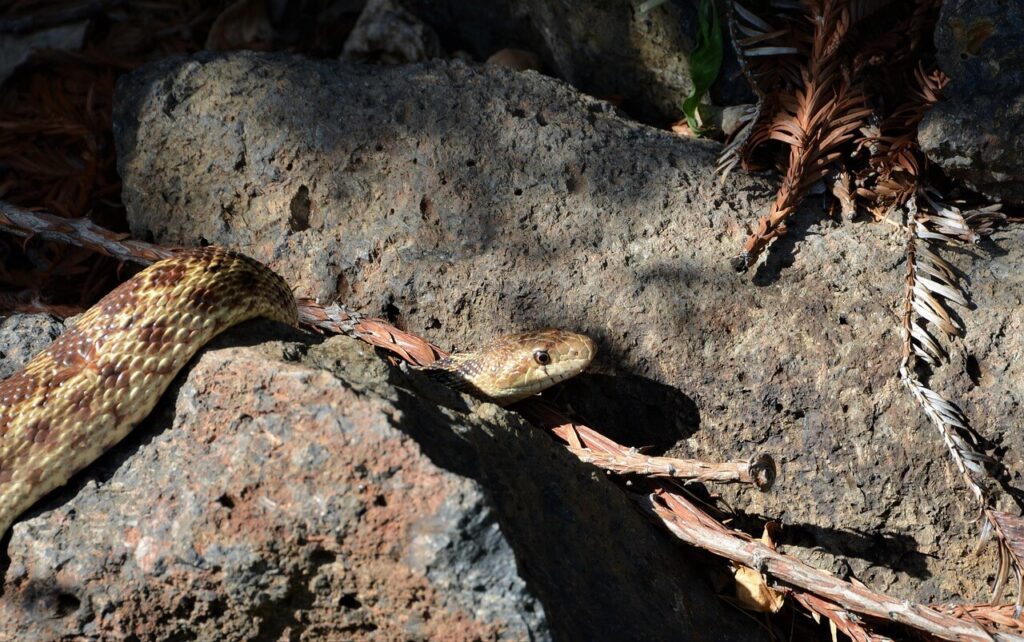
One of the most common is the gopher snake (Pituophis catenifer). It has brown blotches on a tan body and is often mistaken for a rattlesnake. When threatened, it may flatten its head and vibrate its tail, which can confuse people. However, it has no rattle and no venom.
Kingsnakes (Lampropeltis species) are another familiar sight. They typically have bold black and white or black and yellow banding. Kingsnakes are beneficial because they eat rodents and even other snakes, including rattlesnakes. They are not aggressive toward humans.
Coachwhips (Masticophis flagellum) are long, slender snakes that move very quickly. Their speed sometimes startles hikers, but they are not dangerous. They are active during the day and prefer open desert and grassland areas.
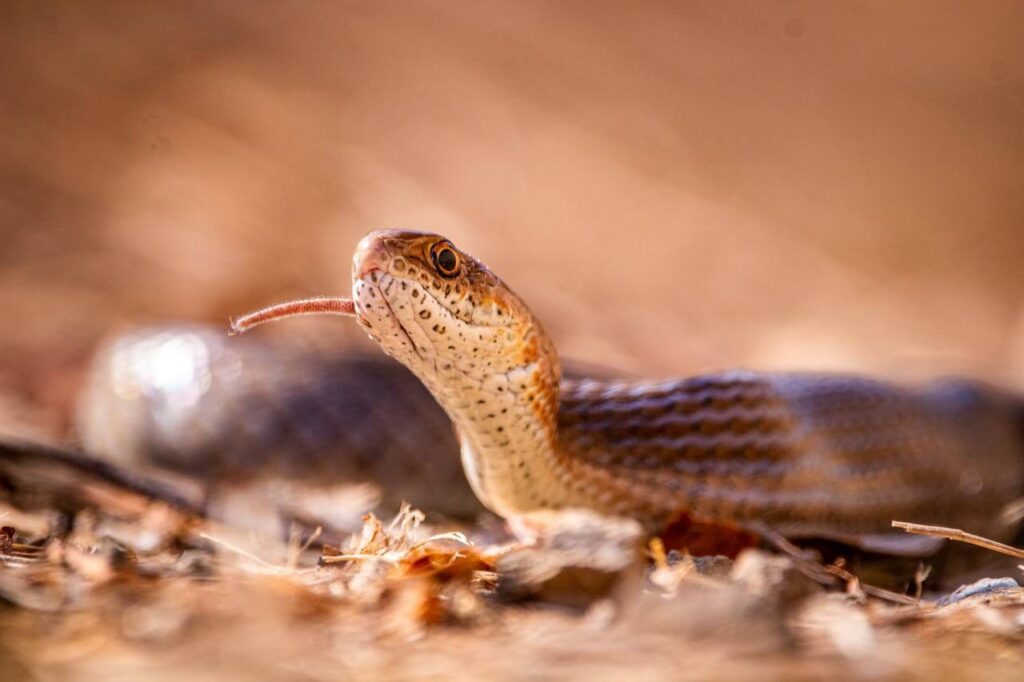
Glossy snakes (Arizona elegans) are lighter in color with darker blotches and smooth, shiny scales. They are usually found in sandy desert regions and are rarely aggressive.
How to Tell a Non-Venomous Snake from a Rattlesnake
Correct identification is important in Arizona. While there are exceptions to every rule, a few general differences can help.
Rattlesnakes have a visible rattle at the end of the tail. Non-venomous snakes do not. However, some harmless snakes vibrate their tails in dry leaves, which can sound similar, so always look carefully.
Rattlesnakes typically have a thicker body and a more triangular-shaped head. Many non-venomous snakes have narrower heads and more slender bodies. Body pattern alone is not a reliable way to judge danger, since some harmless species resemble rattlesnakes.
If you are unsure about a snake’s identity, keep your distance and do not attempt to handle it.
When Non-Venomous Snakes Are Most Active
In Arizona, snake activity depends largely on temperature.
Spring is one of the most active seasons. As temperatures warm, snakes emerge to hunt and breed. During this time, residents may notice increased movement near homes and along trails.
In summer, activity often shifts to early morning and evening because of extreme daytime heat. After monsoon rains, snakes may also be seen crossing roads or moving through neighborhoods.
During cooler winter months, most snakes remain hidden and are rarely encountered.
What to Do If You See a Harmless Snake
If you come across a non-venomous snake in your yard or on a hike, the best response is simple: give it space. Most snakes will leave on their own if not disturbed.
Do not attempt to grab, trap, or kill the snake. This increases the risk of being bitten and can be illegal in certain situations. Keep children and pets away until the snake moves on.
To reduce the chances of attracting snakes around your home, remove debris piles, control rodent populations, and seal small gaps where animals might hide.
Are Non-Venomous Snakes Dangerous?
For the average healthy adult, non-venomous snakes in Arizona are not dangerous. A defensive bite may cause minor pain and slight bleeding, but serious medical complications are rare. Basic wound cleaning is usually sufficient, though medical advice should be sought if there are signs of infection.
Fear of snakes is common, but understanding which species are harmless can make outdoor activities much less stressful.
According to the Arizona Game & Fish Department, most snake species in the state are not dangerous to humans and play an important role in controlling rodent populations.
Final Thoughts
Most snakes found in Arizona are non-venomous and play a useful role in the environment. By learning basic identification skills and respecting wildlife, residents and visitors can safely coexist with these animals. Awareness and calm behavior are the best tools for staying safe while enjoying Arizona’s outdoors.
FAQ
Are most snakes in Arizona venomous?
No. The majority of snake species in Arizona are non-venomous and not considered dangerous to humans.
Can non-venomous snakes bite?
Are most snakes in Arizona venomous?
No. The majority of snake species in Arizona are non-venomous and not considered dangerous to humans.
What is the most common harmless snake in Arizona?
Gopher snakes are among the most frequently seen non-venomous snakes in both rural and suburban areas.
Should I kill a snake in my yard?
Killing snakes is not recommended. Most are harmless and beneficial. Giving the snake space and allowing it to leave naturally is the safest approach.

Ravi Rathore is a field snake researcher and Arizona wildlife enthusiast who studies snake behavior, identification, and desert ecosystems. He focuses on helping hikers, homeowners, and outdoor explorers understand the difference between venomous and non-venomous snakes in Arizona. Through detailed guides and safety resources, he shares practical knowledge to help people stay safe while respecting native wildlife.