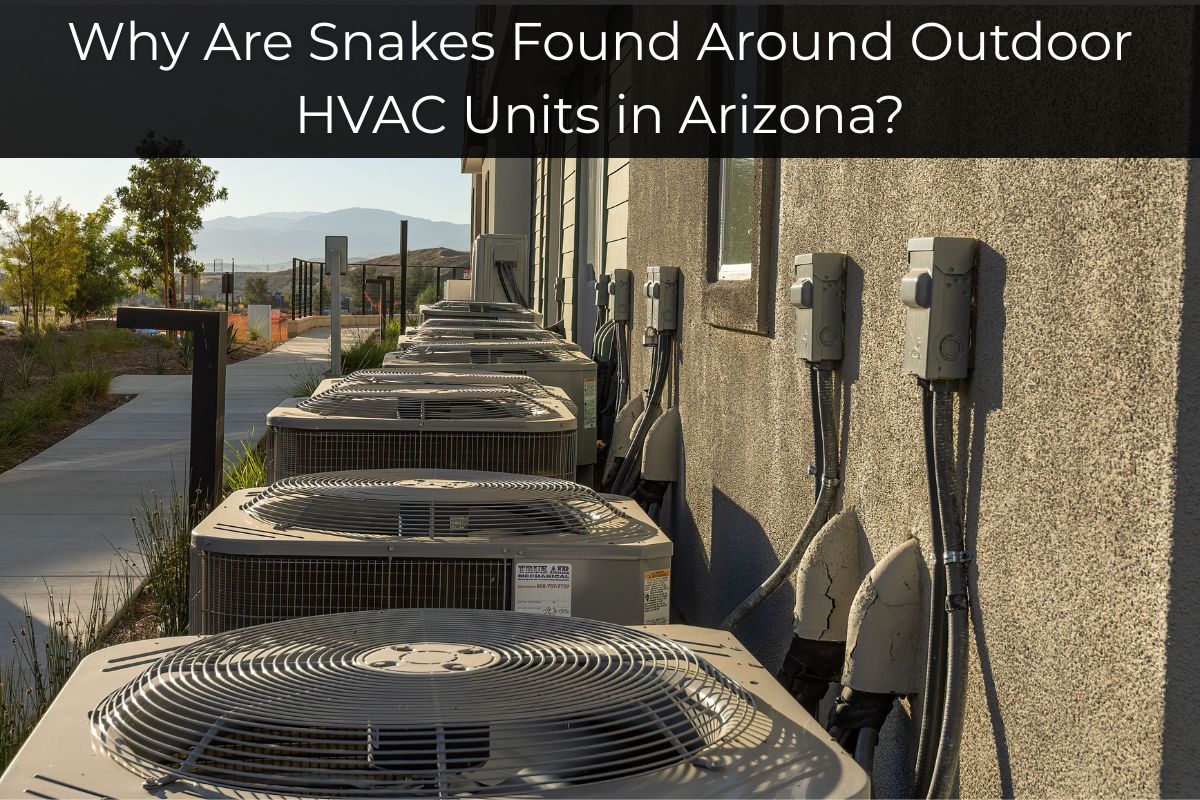
Why Are Snakes Found Around Outdoor HVAC Units in Arizona?
If you’ve ever found a snake near your air conditioner, you may wonder why are snakes found around outdoor HVAC units in Arizona when the equipment seems like an unlikely place for wildlife. The HVAC unit itself does not attract snakes because it is an air conditioner. Instead, the area around the unit can provide shade, shelter, moisture, and access to prey such as lizards and rodents.
Outdoor HVAC systems are common throughout Arizona because air conditioning is essential during the state’s long, hot summers. The units are usually positioned outside the home, often on a concrete pad or gravel area. That location can place them close to walls, landscaping, irrigation lines, fences, and other features that wildlife already uses.
A snake moving through the yard may eventually pass underneath or behind the unit because it offers a protected space away from direct sunlight. In most cases, the snake is simply looking for a temporary place to rest or move through the property.
Can Snakes Enter Homes Through Dryer Vents in Arizona? Useful when discussing other exterior areas that homeowners worry could provide wildlife access.
Why Are Snakes Found Around Outdoor HVAC Units in Arizona
Outdoor HVAC equipment creates several conditions that can make the surrounding area appealing to snakes.
The important point is that the HVAC unit itself usually isn’t the attraction.
Instead, snakes may be responding to the environment surrounding it.
An air-conditioning unit can cast shade against the ground and nearby wall. Depending on the location, condensate from the system can also create occasional moisture around the equipment.
If that same area has lizards, insects, mice, or other small animals, it can become a convenient hunting location.
Shade Is Valuable in the Arizona Heat
Arizona’s summer temperatures can make exposed ground extremely hot.
A snake moving across open gravel or pavement has limited protection from the sun. A shaded area underneath or beside an HVAC unit can provide temporary relief.
This is especially relevant during the hottest part of the afternoon.
A snake may remain hidden during peak heat and move again when temperatures become more comfortable later in the day.
The same principle explains why snakes can sometimes be found beneath patios, concrete slabs, outdoor storage structures, and other shaded areas around Arizona homes.
The Space Beneath the Unit Provides Shelter
Outdoor HVAC units are raised slightly above their base.
That small amount of space can be enough for insects, lizards, and small snakes to move underneath or around the equipment.
The unit also creates a physical barrier from some predators.
A snake resting underneath an HVAC system is less exposed than one sitting in the middle of an open yard.
It doesn’t necessarily mean the snake has made a permanent home there.
It may simply be using the equipment as temporary cover while moving through the property.
Condensation Can Create Moisture
Air conditioners remove moisture from indoor air as they operate.
That water is normally discharged through a condensate line.
If the line releases water near the outdoor unit, the surrounding soil may occasionally become slightly damp.
In an otherwise dry Arizona landscape, even small areas of moisture can attract insects and other wildlife.
The snake may then follow the food chain rather than the water itself.
This is an important distinction because simply seeing a snake near an AC unit does not mean the animal was attracted by the water.
Lizards May Gather Around HVAC Units
Arizona yards often contain lizards, especially where there are rocks, walls, plants, and sources of shade.
Lizards may use the area around an HVAC unit for shelter or hunting insects.
Snakes that eat lizards can occasionally follow them into the same area.
This is one reason keeping the surrounding landscape tidy can make a difference.
Rodents Can Make the Area More Attractive
Some Arizona snakes rely heavily on rodents for food.
If mice or pack rats are active around an outdoor HVAC unit, a snake may eventually investigate the area.
Look for signs such as droppings, nesting material, gnaw marks, or burrows near the foundation.
A snake sighting can sometimes be a sign that another wildlife problem exists nearby.
Why Do Snakes Hide Under Concrete Slabs in Arizona? – A strong contextual link when explaining why shaded spaces around foundations and concrete can provide shelter.
Where Snakes Hide Around HVAC Equipment
A snake doesn’t necessarily need to get inside the HVAC system to use the area for shelter.
There are several places around the equipment where it may remain hidden.
Under the HVAC Unit
The shaded space underneath the equipment can provide temporary shelter.
This is particularly useful during hot afternoons when exposed surfaces become uncomfortable.
Behind the Unit
If the HVAC system is positioned against a wall, the narrow space between the equipment and the building may be relatively protected.
Snakes can move through surprisingly narrow spaces because their bodies are flexible.
Around the Concrete Pad
Small gaps around the concrete base can provide access to cooler soil or existing animal burrows.
Settled soil and erosion can make these openings larger over time.
Inside Nearby Landscaping
Shrubs, ornamental grasses, and dense plants around the AC unit can create additional cover.
A snake may never actually touch the HVAC equipment but still appear to be associated with it because the landscaping provides the main shelter.
Does an Outdoor AC Unit Attract Rattlesnakes?
An outdoor HVAC unit does not specifically attract rattlesnakes.
However, a rattlesnake may use the area if it provides suitable shelter and access to prey.
Rattlesnakes are generally more interested in food, shelter, and suitable temperatures than in human structures.
If rodents are active near an AC unit, the surrounding habitat can become more attractive to a snake that hunts them.
That doesn’t mean every snake found near an air conditioner is a rattlesnake.
Arizona has many non-venomous species, and identifying the snake correctly is important before deciding how to respond.
Can Snakes Get Through Garage Door Gaps in Arizona? Works naturally when discussing potential access points around the exterior of a home.
Why Location Matters
The position of an HVAC unit can influence how much wildlife activity occurs around it.
A unit surrounded by bare gravel and located away from vegetation provides fewer hiding places than one surrounded by dense shrubs.
Similarly, an air conditioner near a leaking irrigation line may experience more insect and lizard activity than one in a dry part of the yard.
Homes bordering undeveloped desert areas may also see more wildlife moving through their yards.
In those situations, an occasional snake near the HVAC system may simply be part of normal desert wildlife activity.
What Makes an HVAC Area More Attractive to Snakes?
Several conditions can combine to make the area more appealing.
Dense vegetation provides cover.
Rodents provide food.
Irrigation provides moisture.
Rocks provide hiding spaces.
The HVAC unit provides shade.
None of these factors guarantees that a snake will appear, but together they create a habitat that wildlife may find useful.
This is why changing the surrounding environment is usually more effective than trying to do anything to the HVAC equipment itself.
When Are Snakes Most Likely to Be Near HVAC Units?
Snake activity depends heavily on temperature and species.
During the hottest part of summer, many snakes avoid exposed surfaces during the middle of the day.
They may remain under shade and become more active during the evening, nighttime, or early morning.
Spring and fall can also bring increased activity because temperatures are more comfortable.
Homeowners may therefore notice more wildlife around outdoor equipment during transitional seasons or during cooler parts of the day.
How to Reduce Snake Activity Around an Outdoor HVAC Unit
You cannot completely prevent snakes from passing through an Arizona yard, especially if your home is close to natural desert habitat. However, you can make the area around your outdoor HVAC unit less appealing by reducing food, water, hiding places, and easy travel routes.
The goal is not to make the entire yard unsuitable for wildlife. Instead, focus on the immediate area around your home and especially the spaces where people regularly walk, work, or enter the house.
Keep Vegetation Away From the HVAC Unit
Trim shrubs, ornamental grasses, vines, and other dense vegetation around the air conditioner.
Plants growing directly against the unit can create shaded pathways where snakes and rodents can move without being easily noticed.
Leaving some open space around the equipment also makes it easier to inspect the area before performing maintenance.
Check for Rodent Activity
If you repeatedly notice snakes around the same HVAC unit, look for evidence of rodents nearby.
Check surrounding walls, landscaping, storage areas, and irrigation equipment for droppings, nesting material, holes, or signs of chewing.
Reducing rodent activity can remove one of the biggest reasons a snake may continue visiting the property.
Fix Water Leaks
Inspect irrigation lines, outdoor faucets, and the condensate drainage area around the HVAC system.
You don’t need to eliminate every trace of moisture from your yard, but standing water and constantly damp soil can encourage insects, rodents, and lizards.
Those animals can then attract predators such as snakes.
Remove Clutter Near the Unit
Avoid storing boards, boxes, unused pots, tools, bricks, or other materials immediately beside the HVAC equipment.
These objects create additional hiding places and can make it difficult to see what’s happening around the unit.
Keeping the area open makes regular inspection much easier.
Keep Gravel and Landscaping Maintained
Arizona homeowners often use gravel around air-conditioning equipment because it requires little water.
Gravel itself doesn’t attract snakes. However, thick vegetation, accumulated leaves, debris, and rodent burrows beneath or between landscaping materials can create shelter.
Raking the area occasionally and keeping vegetation controlled can reduce those opportunities.
What Should You Do If a Snake Is Under Your AC Unit?
If you see a snake under or beside an outdoor HVAC unit, the safest response is to leave it alone.
Don’t reach underneath the equipment, poke the snake with a tool, or attempt to pull it out.
Move children and pets away from the area and give the snake a clear opportunity to leave.
If the snake is blocking an entrance or is located somewhere people cannot safely avoid, contact a qualified wildlife professional for assistance.
Trying to identify the snake from a safe distance can also be useful, but don’t approach it simply to get a closer look.
Arizona has both venomous and non-venomous species, and identifying a snake based only on color or a quick glance can be unreliable.
Should You Turn Off the Air Conditioner?
Seeing a snake near the outdoor HVAC unit does not normally mean you need to turn off the system.
The snake is generally outside the mechanical components and is using the surrounding space for shelter.
If the equipment is operating normally, don’t interfere with it simply because a snake is nearby.
If you notice an actual mechanical problem, damaged wiring, or a snake that appears to have entered part of the equipment, keep your distance and have the system inspected by an appropriate professional.
Never put your hands inside an outdoor HVAC unit to investigate an animal.
Can Snakes Get Inside an HVAC System?
A snake being near an outdoor AC unit is very different from a snake getting inside the home’s air-conditioning system.
The outdoor condenser contains mechanical and electrical components, while the home’s ductwork is a separate system.
Snakes are unlikely to travel through normal air-conditioning ducts simply because they are near the exterior unit.
If you hear unusual sounds coming from your HVAC equipment or find evidence of an animal inside the system, don’t dismantle the unit yourself.
Have a qualified HVAC technician inspect it safely.
How Landscaping Around an AC Unit Affects Snake Activity
The landscaping design around an HVAC unit can make a bigger difference than the equipment itself.
A unit surrounded by dense shrubs, ground cover, stacked decorative stones, and irrigation lines offers significantly more shelter than one positioned in a clear, open area.
This doesn’t mean homeowners need to remove all landscaping.
Instead, maintain enough open space around the equipment to allow inspection and service access.
Trees and large shrubs should also be managed so they don’t create continuous shaded pathways along the home’s exterior.
Timing can also make a difference when you’re trying to avoid encounters, so it’s worth knowing what time of day are rattlesnakes most active in Arizona? before working around shaded areas, landscaping, or outdoor equipment.
Why Arizona Homes Near Desert Areas May See More Snakes
Some homes naturally experience more wildlife activity than others.
Properties near desert washes, undeveloped land, rocky hillsides, agricultural areas, and natural preserves may have more snakes moving through the surrounding landscape.
A snake appearing beside an HVAC unit doesn’t necessarily indicate a problem with the home.
It may simply have followed a natural travel route through the yard and stopped at the equipment because the shaded area offered temporary shelter.
This is especially important to remember when living in areas where residential neighborhoods meet native desert habitat.
Do Backyard Fire Pits Attract Snakes in Arizona? Useful for readers interested in how outdoor features and surrounding landscaping influence snake activity.
Do Outdoor HVAC Units Need Snake-Proofing?
In most cases, the HVAC unit itself does not need special snake-proofing.
The better approach is to manage the surrounding environment.
Keep the equipment accessible, maintain vegetation, control rodents, repair water leaks, and remove unnecessary clutter.
If there are unusual openings or structural gaps around the equipment pad or nearby foundation, have them inspected and repaired appropriately.
Avoid wrapping the unit in homemade mesh or materials that could interfere with airflow, ventilation, servicing, or manufacturer requirements.
Why Are Snakes Found Around RVs and Campers in Arizona? Useful for readers dealing with snake activity around outdoor equipment and recreational vehicles.
When Repeated Snake Sightings Need More Attention
One snake sighting does not necessarily mean you have a recurring problem.
However, repeated sightings in the exact same location deserve a closer look.
If you regularly find snakes around the HVAC unit, investigate what is attracting prey animals to that part of the yard.
Look for rodent burrows, lizard activity, dense vegetation, leaking irrigation, accumulated debris, or other sheltered areas.
The snake may be responding to one of these conditions rather than choosing the HVAC unit itself.
Why Are Snakes Found Near Outdoor Storage Sheds in Arizona? Relevant when comparing HVAC equipment with other sheltered structures around residential properties.
A Simple Outdoor HVAC Inspection Routine
You can make the area easier to monitor with a quick routine.
Walk around the unit periodically and check that vegetation has not become too dense.
Look for rodent signs, standing water, damaged landscaping, and gaps around the equipment pad.
Before reaching behind or underneath the unit, inspect the area visually and use appropriate caution.
If the area remains clear and maintained, you’ll have fewer places for snakes and their prey to hide.
Arizona homeowners can also review wildlife guidance from the Arizona Game & Fish Department when dealing with snakes and other wildlife around residential properties.
Final Thoughts
If you’re wondering why are snakes found around outdoor HVAC units in Arizona, the equipment itself usually isn’t the reason. The surrounding conditions are what matter most. Shade from the unit, moisture from nearby drainage, vegetation, rodents, lizards, and protected spaces can combine to create an attractive location for a snake passing through the yard.
The good news is that homeowners can address many of these conditions without making major changes to the property. Keeping plants trimmed, controlling rodents, correcting water leaks, removing clutter, and maintaining an open area around the HVAC equipment can make the location less attractive to snakes.
A snake near an outdoor AC unit is not automatically a sign of an infestation or a dangerous situation. In many cases, it is simply wildlife using a convenient shaded area in the desert environment.
Give the snake plenty of space, keep children and pets away, and avoid reaching underneath the equipment. If repeated sightings continue, look for the food and shelter conditions that may be bringing snakes into that part of the yard.
Frequently Asked Questions
Do outdoor AC units attract snakes in Arizona?
Outdoor AC units don’t specifically attract snakes. Snakes may visit the area because the equipment creates shade or because nearby vegetation, rodents, lizards, and moisture provide suitable habitat.
Can a snake live under an outdoor HVAC unit?
A snake can temporarily use the space beneath or around an HVAC unit as shelter. However, the unit itself is not normally a permanent habitat.
Do rattlesnakes hide around air conditioners?
A rattlesnake may use the shaded area around an outdoor AC unit if suitable shelter and prey are nearby. Finding a snake there does not automatically mean it is a rattlesnake.
Should I spray a snake under my AC unit?
No. Spraying or disturbing a snake can cause it to become defensive. Keep your distance and allow it to move away, or contact a professional if it cannot safely be avoided.
Can snakes get inside air-conditioning ducts?
It is uncommon for a snake to enter a home’s normal air-conditioning ductwork from an outdoor condenser. If you suspect an animal has entered the HVAC system, have the equipment professionally inspected.
How can I keep snakes away from my outdoor AC unit?
Reduce nearby rodent activity, control dense vegetation, repair water leaks, remove clutter, and keep the area around the HVAC equipment open and easy to inspect.
Does AC condensation attract snakes?
Condensation itself isn’t usually a direct snake attractant. Moisture can encourage insects, lizards, and other small animals, which may indirectly attract snakes looking for prey.
Should I move my outdoor HVAC unit because of snakes?
Usually not. Moving an HVAC unit is rarely necessary because of occasional snake sightings. Managing the surrounding landscaping and wildlife activity is generally a better approach.
Featured Image
Image idea: A realistic stucco Arizona home with an outdoor HVAC condenser sitting on a concrete pad. A non-venomous gopher snake is partially hidden in the shade behind the unit, with desert gravel, low shrubs, and warm Arizona surroundings.
Alt text:
Snake hiding around an outdoor HVAC unit in Arizona
Supporting Image 1
Image idea: Close-up view of a gopher snake resting in the shaded space beside an outdoor AC condenser, with the HVAC unit clearly recognizable.
Alt text:
Gopher snake near an outdoor AC unit in Arizona
Supporting Image 2
Image idea: Arizona homeowner trimming shrubs and clearing debris around an outdoor HVAC unit, showing a clean open area around the equipment.
Alt text:
Maintaining landscaping around an outdoor HVAC unit in Arizona

Ravi Rathore is a field snake researcher and Arizona wildlife enthusiast who studies snake behavior, identification, and desert ecosystems. He focuses on helping hikers, homeowners, and outdoor explorers understand the difference between venomous and non-venomous snakes in Arizona. Through detailed guides and safety resources, he shares practical knowledge to help people stay safe while respecting native wildlife.