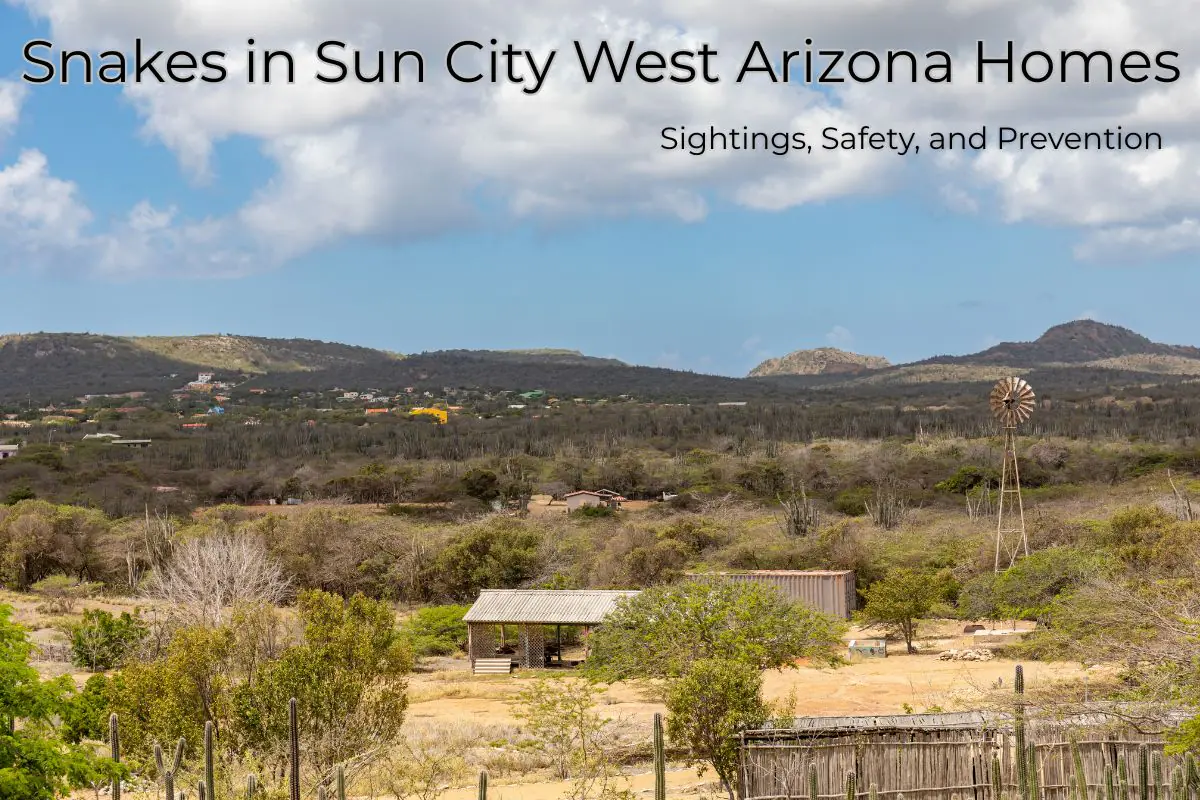
If you live in Sun City West, Arizona, snakes in Sun City West Arizona homes can occasionally be a concern, particularly in neighborhoods near desert areas, open land, golf courses, washes, and other wildlife habitat. Snakes may also be seen in yards, garages, patios, walking paths, and landscaped areas.
Not every snake found around Sun City West is dangerous. Several non-venomous species occur in the area, while rattlesnakes are the main venomous snakes residents need to be aware of.
This guide explains why snakes occur around Sun City West, which snakes you may encounter, where sightings are more likely, when activity changes throughout the year, and what homeowners can do to reduce unwanted encounters.
Why Snakes Are Common in Sun City West
Sun City West was developed in a desert environment that naturally supports reptiles and desert wildlife. Even though many neighborhoods look highly suburban today, nearby desert terrain still provides ideal snake habitat. Open land, golf courses, rocky landscaping, irrigation systems, and shaded backyard structures all create conditions that attract snakes.
Arizona snakes are extremely adaptable. They often move between natural desert areas and residential properties while searching for prey like mice, rats, lizards, frogs, and insects. During hotter months, snakes may travel closer to homes because patios, garages, and shaded landscaping provide relief from the heat.
Another reason snakes appear frequently in Sun City West is because many residents enjoy desert-style landscaping. Rock gardens, decorative boulders, cactus beds, and dense shrubs can unintentionally provide perfect hiding places for snakes during the day.
Common Snakes Found in Sun City West Arizona Homes
Several snake species live in the Sun City West area. Some are harmless, while others require extreme caution.
Mojave rattlesnakes are less common but still present in some desert-edge areas. These snakes are highly venomous and should never be approached.
Non-venomous snakes are also extremely common in Sun City West. Gopher snakes are often mistaken for rattlesnakes because of their similar patterns and defensive behavior. However, they are harmless and actually help control rodent populations around homes.
King snakes are another beneficial species because they prey on rodents and even other snakes, including rattlesnakes. Coachwhip snakes are fast-moving, non-venomous snakes frequently seen crossing roads or moving quickly through yards.
Learning basic snake identification helps residents react calmly during encounters instead of panicking unnecessarily.
.
Golf Communities and Backyard Encounters
Golf communities are among the most common locations for snake encounters in Sun City West. Golf courses provide water, shade, prey animals, and large undisturbed areas where snakes thrive naturally.
Residents living near fairways or water hazards often report snakes near backyard fences, patios, pool equipment, and walking paths. Early morning golfers sometimes encounter rattlesnakes warming themselves on cart paths before temperatures rise.
Snakes are especially active around golf course ponds because frogs, birds, insects, and rodents gather near water sources. During summer, snakes may travel farther into neighborhoods while searching for cooler shaded areas.
Backyard encounters often happen when homeowners move patio furniture, gardening supplies, or pool equipment without checking underneath first. Residents should always inspect shaded areas carefully before reaching into hidden spaces.
Where Residents Usually Find Snakes
Snakes in Sun City West Arizona homes are commonly discovered in predictable locations.
Garages are one of the most frequent hiding spots because they remain cool and shaded. Open garage doors during summer evenings may allow snakes to enter while searching for shelter.
Patios with potted plants, decorative stones, and outdoor furniture create ideal resting areas. Pool equipment areas also attract snakes because of moisture and shade.
Residents frequently report snakes near:
- Air conditioning units
- Storage sheds
- Block wall gaps
- Bird feeders
- Irrigation boxes
- Trash bin areas
- Outdoor grills
- Desert plants and cactus beds
Some homeowners discover snakes after noticing pets barking repeatedly at bushes or corners of the yard. Dogs often detect snake movement long before humans notice anything unusual.
Why Garages Attract Snakes in Arizona
Garages provide nearly perfect shelter conditions for snakes. They remain cooler than outdoor desert surfaces, offer protection from predators, and frequently contain clutter where snakes can hide safely.
Rodents are another major reason snakes enter garages. Pet food storage, cardboard boxes, and cluttered storage areas often attract mice. Once rodents appear, snakes may follow.
Residents can reduce garage snake activity by:
- Installing weather stripping under garage doors
- Keeping storage organized
- Avoiding cardboard clutter
- Sealing wall cracks
- Removing rodent food sources
- Using sealed plastic containers instead of open bins
Checking garages before entering at night is especially important during summer months.
Seasonal Snake Movement in Sun City West
Snake activity changes throughout the year depending on temperatures.
Spring
Spring is one of the busiest snake seasons in Arizona. As temperatures rise, snakes emerge from winter brumation and begin searching for food and mates. Residents commonly report increased sightings during March, April, and May.
Summer
During extreme summer heat, snakes become more active during mornings and evenings instead of midday. They search for cooler shaded areas near homes, patios, garages, and irrigation systems.
Fall
Autumn temperatures create another active period because snakes hunt heavily before winter. Many residents mistakenly believe snake season ends after summer, but fall sightings remain common.
Winter
Snakes become less active during colder months but do not disappear completely. Warm garages, storage spaces, and sunny patios may still attract occasional snakes during winter afternoons.
Understanding rattlesnake season in Arizona helps Sun City West residents stay alert during peak snake activity periods.
Snake Encounters During Morning Walks
Morning walks are extremely popular in Sun City West, especially among retirees enjoying cooler desert temperatures. Unfortunately, snakes are also active during these same hours.
Residents walking near golf courses, landscaped trails, or desert-edge sidewalks should remain alert. Rattlesnakes sometimes rest directly on warm pavement during early mornings.
Wearing closed-toe shoes and staying on paved paths reduces risk significantly. Walking pets on shorter leashes also prevents dogs from approaching bushes or rocks where snakes may hide.
Most snake encounters happen when people accidentally surprise snakes at close range. Giving snakes space usually prevents aggressive behavior entirely.
Learning how snakes get inside houses in Arizona can help homeowners identify gaps and entry points around garages and patios.
Protecting Small Pets From Rattlesnakes
Pets face higher risks because they naturally investigate movement and unfamiliar smells. Dogs especially may approach snakes too closely, leading to bites around the nose or face.
Pet owners should avoid allowing dogs to roam freely near desert washes, golf course edges, or unmanaged vegetation. Small dogs are particularly vulnerable because even a moderate rattlesnake bite can become life-threatening quickly.
Residents can improve pet safety by:
- Supervising outdoor time
- Keeping grass trimmed
- Removing rodent activity
- Installing snake fencing
- Using outdoor lighting at night
- Training dogs to avoid snakes
Some Arizona pet owners also choose rattlesnake aversion training for dogs living in high-risk areas.
How HOA Landscaping Can Affect Snake Sightings
HOA landscaping decisions can influence snake activity throughout entire neighborhoods. Dense decorative shrubs, excessive ground cover, and poorly maintained common areas may unintentionally create shelter for snakes and rodents.
Communities with regular landscaping maintenance generally experience fewer sightings. Keeping walking paths visible, trimming overgrown vegetation, and managing rodent populations all reduce snake activity.
Residents should also report repeated sightings in community common areas so management teams can address landscaping concerns promptly.
Common Mistakes Homeowners Make
One of the biggest mistakes homeowners make is trying to kill or handle snakes themselves. Many bites occur because residents approach snakes too closely.
Another mistake is assuming every snake is dangerous. Non-venomous species provide valuable rodent control and often help reduce rattlesnake populations naturally.
Ignoring rodent problems is another major issue. Homes with mice or rats almost always attract predators eventually.
Some residents also create ideal snake habitat unintentionally by leaving cluttered patios, dense landscaping, or standing water untreated for long periods.
Signs a Snake May Be Living Nearby
Residents may notice several warning signs before actually seeing a snake.
These signs include:
- Shed snake skins
- Small animal disappearances
- Rodent activity suddenly decreasing
- Strange pet behavior
- Tracks near dusty surfaces
- Snake droppings around garages or patios
Repeated sightings in the same location may indicate nearby shelter or nearby shelter, prey or travel routes.
What to Do After a Snake Sighting
If you encounter a snake:
- Stay calm
- Keep your distance
- Move pets and children indoors
- Do not attempt capture
- Observe safely from far away
- Contact professional snake removal if necessary
Most snakes will leave the area naturally if left undisturbed.
For official safety information, residents can review resources from the Arizona Game & Fish Department Snake Safety.
Snake Removal Services in Sun City West
Professional snake removal companies safely relocate snakes without harming them. Licensed wildlife specialists understand how to identify species, capture snakes safely, and inspect properties for additional risks.
Many services also help homeowners identify landscaping changes that reduce future snake encounters.
Attempting DIY removal is strongly discouraged, especially for rattlesnakes.
Long-Term Prevention for Desert Homes
Long-term snake prevention requires consistency rather than temporary fixes. Residents who maintain clean yards, reduce rodent populations, trim vegetation regularly, and inspect entry points usually experience fewer encounters.
Installing snake fencing around patios or pet areas provides additional protection. Outdoor lighting helps improve visibility during nighttime hours when snakes are most active.
Preventive maintenance is far more effective than reacting after repeated sightings occur.
FAQs
Are snakes common in Sun City West Arizona homes?
Yes. Snake sightings are relatively common because the community is surrounded by desert habitat, golf courses, and landscaped neighborhoods.
What is the most dangerous snake in Sun City West?
The Western Diamondback rattlesnake is the most commonly encountered venomous species.
Do snakes enter garages often?
Yes. Garages provide cool shaded shelter and sometimes attract rodents.
Are most snakes venomous?
No. Many snakes in Sun City West are non-venomous and beneficial for rodent control.
When is snake season in Arizona?
Snake activity is highest during spring, summer, and early fall.
Can snakes climb walls or fences?
Some snakes can climb textured surfaces and block walls.
Should I kill a snake if I see one?
No. Keep your distance and contact professional removal services if needed.
How do I protect my pets from rattlesnakes?
Supervise outdoor time, keep landscaping clean, and avoid desert-edge walking areas during peak snake activity.
Do pools attract snakes?
Pools themselves usually do not, but surrounding vegetation and water sources attract prey animals.
Can snake fencing work?
Yes. Properly installed snake fencing can reduce snake entry significantly.
Final Thoughts
Snakes in Sun City West Arizona homes are part of living in Arizona’s desert environment. While encounters can feel alarming, most snakes prefer avoiding humans and only become dangerous when threatened or cornered.
Residents who understand snake behavior, maintain clean landscaping, reduce rodent activity, and stay alert during peak snake seasons can dramatically lower the risk of encounters around their homes and yards.
Sun City West’s beautiful golf communities, walking paths, and desert landscaping make it a wonderful place to live, but respecting local wildlife is essential for long-term safety. With awareness, prevention, and responsible property maintenance, homeowners can enjoy Arizona living while safely coexisting with native snake species.

Ravi Rathore is a field snake researcher and Arizona wildlife enthusiast who studies snake behavior, identification, and desert ecosystems. He focuses on helping hikers, homeowners, and outdoor explorers understand the difference between venomous and non-venomous snakes in Arizona. Through detailed guides and safety resources, he shares practical knowledge to help people stay safe while respecting native wildlife.